
Fake Modelling Agencies in Nigeria: 7 Red Flags Aspiring Models and Parents Should Know
Getting a message saying “We think you have the look” can be exciting.
For a new model, it can feel like the opportunity you have been waiting for.
But excitement should never replace verification.
Today, aspiring models can be approached through Instagram, TikTok, WhatsApp, email and other online platforms. Unfortunately, the same platforms that make legitimate scouting easier also make it easier for people to impersonate agencies, scouts, photographers and casting professionals.
Recent reports involving fake job and modelling approaches in Lagos make this conversation especially important.
At DXC Model Management, we believe aspiring models — and especially parents of younger models — should understand how to question an opportunity before accepting it.
Here are seven warning signs worth paying attention to.
1. They Guarantee That You Will Get Modelling Jobs
Be cautious when someone promises:
“Sign up today and we will definitely get you jobs.”
or
“Pay this amount and your first campaign is guaranteed.”
Professional modelling does not work like that.
An agency may develop you, represent you, submit you for castings and introduce you to potential clients.
But the client ultimately decides whom they book.
Even established models do not win every casting they attend.
Consumer-protection guidance also identifies guaranteed assignments and guaranteed earnings as common warning signs in modelling scams.
A legitimate conversation should explain the opportunity realistically — not sell you a guaranteed dream.
2. You Are Asked to Pay Money Without Being Told Exactly What It Is For
This requires some nuance.
Paying for something within the modelling industry does not automatically mean you are being scammed.
A model may legitimately pay for a clearly defined service such as:
- training or development
- professional photography
- portfolio development
- comp-card production
- classes
- workshops
- other optional development services
The problem begins when someone demands money supposedly to:
“secure your modelling job,”
“reserve your campaign,”
“unlock your payment,”
or guarantee representation.
Before paying for anything, ask:
What exactly am I paying for?
What will I receive?
Is this payment for a service, or are you claiming it guarantees me a job?
Can I receive the details in writing?
Be especially careful when you are pressured to transfer money immediately.
Unexpected casting approaches that quickly turn into demands for payment are a recognised scam pattern.
3. You Cannot Properly Verify the Agency or Scout
A logo and an Instagram account are not enough.
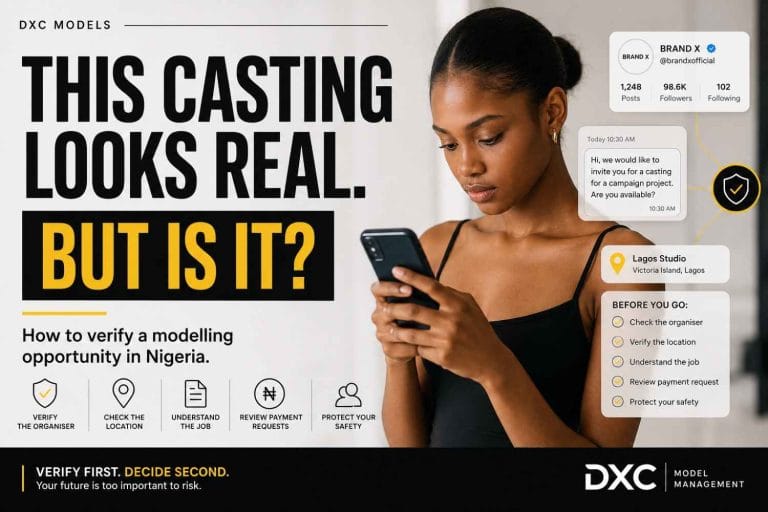
Before trusting an agency, scout or casting representative, check whether you can independently verify them.
Look for things such as:
An official website
A professional email address
A consistent business identity
Previous work
Real talent associated with the organisation
A physical or verifiable business presence where applicable
Other established industry professionals who recognise them
If somebody claims to work for a modelling agency, check the agency’s official channels rather than relying solely on information the person sends you.
A scammer can copy photographs.
A scammer can create a logo.
A scammer can imitate someone’s social-media profile.
Verification should happen outside the conversation with the person recruiting you.
4. The Casting Location or Arrangement Feels Secretive
A genuine modelling opportunity should be able to explain basic information such as:
Who is organising the casting?
Where is it happening?
What is the project?
Who will be present?
What type of model is required?
Be cautious if the person repeatedly changes locations, refuses to provide basic information or insists that everything must remain secret.
For younger models, parents or guardians should be involved in communications and appointments.
A legitimate opportunity should not require a young model to hide the process from their family.
5. Someone Requests Inappropriate Images or Uncomfortable Private Content
Normal modelling submissions commonly involve photographs that clearly show:
your face,
your profile,
and your overall proportions or appearance in appropriate clothing.
That does not mean a supposed scout should be requesting inappropriate private photographs.
If a request makes you uncomfortable, stop.
If you are under 18, involve a parent or guardian in modelling communications and submissions.
Someone claiming:
“Every serious model does this,”
or
“Don’t tell anyone because this is how professional casting works”
should immediately raise concern.
Professionalism and personal safety are not opposites.
6. There Is No Clear Agreement or Explanation
You should understand what you are agreeing to.
Before entering a representation, development or paid-service arrangement, ask questions.
For example:
Is this representation or training?
Is the agreement exclusive?
How long does it last?
How does the agency earn money?
What services are included?
Are there additional costs?
How are bookings handled?
What happens if I decide to leave?
Do not allow excitement about becoming a model to stop you from reading what you are signing.
For parents registering children, this is even more important.
7. Everything Is Urgent
Scammers often rely on emotion.
You may hear:
“Pay before 5pm or you lose your place.”
“We have another model waiting.”
“This opportunity only exists today.”
“Don’t ask too many questions.”
Pressure can make people stop verifying things properly.
Research on job scams has also found urgency and time pressure to be important behavioural signals associated with fraudulent approaches.
A genuine opportunity may have a real deadline.
But you should still be allowed to understand who you are dealing with and what you are agreeing to.
Before Attending a Modelling Casting, Check These Things
Before leaving home for an unfamiliar casting or meeting, verify:
The agency or company name
The person who contacted you
The location
The purpose of the casting
The expected clothing or submission requirements
Whether any payment is involved
Who will be present
And if you are under 18, your parent or guardian should know about and be involved in the process.
Do not allow the fear of “missing your big break” to make basic safety precautions feel unprofessional.
They aren’t.
Agency, Academy and Photography Services Are Not the Same Thing
This is another area where aspiring models sometimes become confused.
A modelling agency/model management company represents talent and works to connect suitable models with opportunities.
A model academy or development programme teaches skills and prepares aspiring talent.
A photographer or studio creates photographs.
Sometimes one organisation may provide several of these services.
That is not automatically suspicious.
What matters is transparency.
You should know what service you are receiving and what you are paying for.
Someone selling you photography or training should not disguise that purchase as a guaranteed modelling job.
Parents: Ask Questions Before Paying or Signing Anything
Parents are often approached with exciting statements about a child’s potential.
Take your time.
Ask:
What exactly is being offered?
Is this representation, training, photography or a casting?
What does the payment cover?
Can I see the agreement?
Who will work directly with my child?
Where will activities take place?
FTC consumer guidance specifically warns parents to research modelling programmes carefully and get the details of promises and services in writing.
A professional organisation should not become hostile simply because a parent asks reasonable questions.
You Don’t Have to Rush Your Modelling Journey
There is no single message, scout or casting call that determines whether you can become a successful model.
Learn the industry.
Build appropriate photographs.
Develop your confidence.
Understand the different areas of modelling.
Research the people you work with.
And ask questions.
A genuine opportunity should survive basic verification.
Interested in Modelling With DXC?
If you’re considering professional modelling or want to understand what category of modelling may suit you, explore DXC Model Management and our talent-development resources.
Visit: dxcmodels.com
Already interested in applying?
Use the official application/contact channels listed directly on the DXC website rather than responding to unofficial accounts claiming to represent us.
DXC SAFETY NOTE:
If someone contacts you claiming to represent DXC, verify the account or contact details through dxcmodels.com or call 07072261426 before sharing personal information, attending a meeting or making any payment.