How to Take Modelling Polaroids at Home With Your Phone
One of the most common mistakes aspiring models make is thinking they need a full professional photoshoot before they can apply to a modelling agency.
You usually don’t.
When an agency asks for polaroids, also commonly called digitals, the goal is not to see how you look after professional lighting, styling, retouching and makeup.
The agency wants to see you clearly.
Your face.
Your proportions.
Your profile.
Your current appearance.
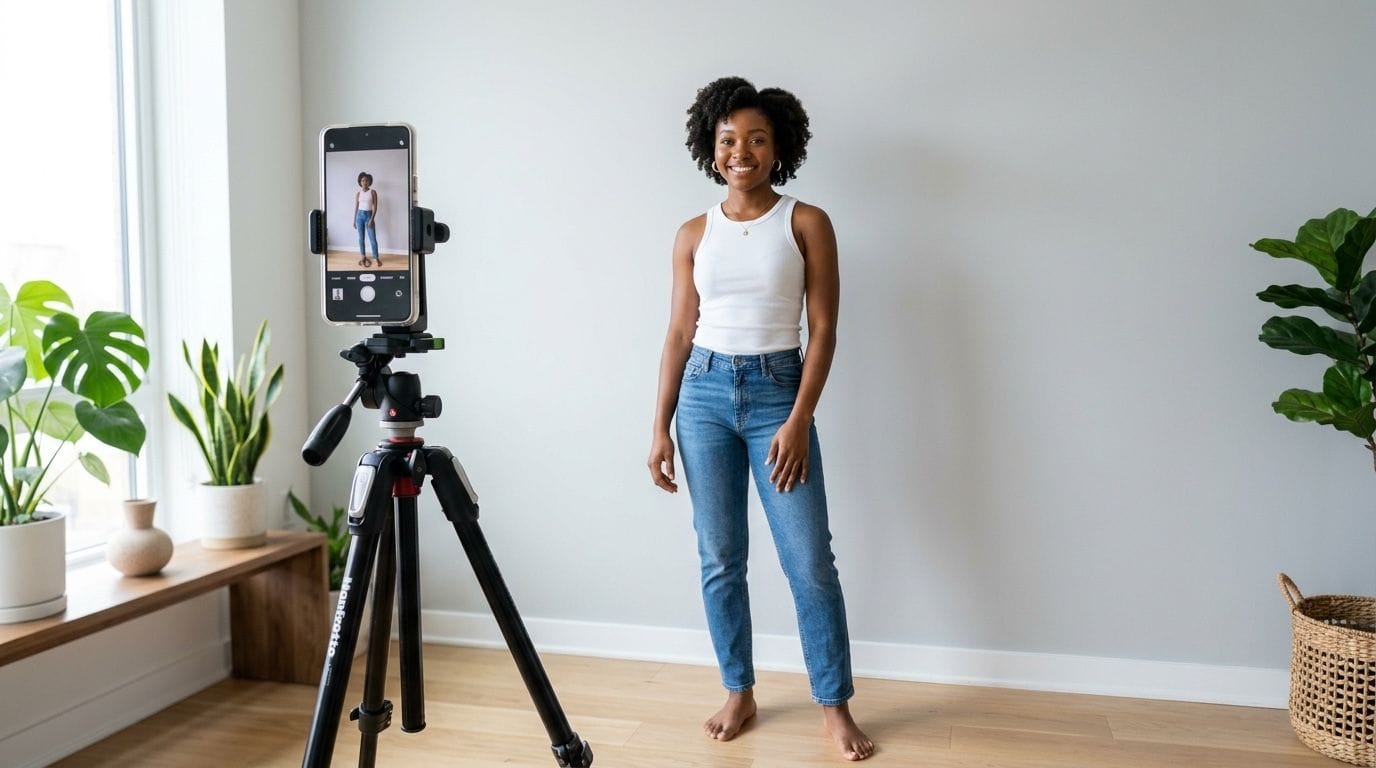
And with a reasonably good smartphone, natural daylight and a simple background, you can create useful modelling polaroids at home.
Here is how to do it properly.
What Are Modelling Polaroids?
Modelling polaroids are simple, relatively unedited photographs used to show what a model currently looks like.
Unlike portfolio photographs, they are not supposed to be highly styled.
Think of them as a visual introduction.
A modelling agency may use them to assess things such as:
- facial features
- body proportions
- posture
- profile
- current hairstyle
- natural appearance
- potential suitability for different modelling categories
This is why heavily edited photographs, beauty filters and elaborate studio photographs may actually make a model application less useful.
The agency needs to see the person applying.
What You Need
You do not need much.
1. A smartphone
A modern smartphone camera is usually sufficient for basic application polaroids.
Whenever possible, use the main rear camera rather than relying completely on the selfie camera.
Ask somebody to take the photographs for you.
2. Natural daylight
Stand near a large window or photograph outside in soft daylight.
Avoid extremely harsh direct sunlight.
Your face should be clearly visible without heavy shadows.
You do not need dramatic studio lighting.
3. A plain background
Use:
white, cream, light grey or another simple neutral wall.
The background should not compete with you.
Avoid:
- messy rooms
- patterned curtains
- furniture everywhere
- distracting artwork
- busy outdoor environments
The model should be the first thing we notice.
What Should You Wear?
Keep your clothing simple and fitted enough for your proportions to be visible.
For example:
Women
A simple fitted top or tank top with fitted jeans, leggings or similar basic clothing can work.
Men
A fitted plain T-shirt or vest with fitted trousers or jeans can work.
The objective is not to dress provocatively.
It is simply to avoid oversized clothing that completely hides your proportions.
Choose neutral colours where possible.
Black, white, grey and simple earth tones usually photograph well.
What About Makeup?
For basic polaroids:
less is usually better.
The agency needs to see your natural features.
Avoid:
- heavy contouring
- dramatic lashes
- strong beauty filters
- excessive skin smoothing
- FaceTune-style editing
If you wear makeup, keep it extremely natural.
And if the agency specifically asks for no makeup, follow that instruction.
What About Hair?
Your hair should allow your face to be seen clearly.
For some photographs, wearing your hair naturally is perfectly fine.
For your facial photographs, however, it can be useful to pull the hair away from your face so your features and face shape are visible.
Do not completely change your hairstyle just for the application.
The photographs should represent how you currently look.
The Essential Modelling Polaroids
Different agencies may ask for different photographs, so always follow the submission instructions you are given.
But a useful basic set usually includes the following.
1. Straight-On Headshot
Look directly into the camera.
Keep your expression relaxed.
No extreme posing.
No dramatic smile unless requested.
The photograph should clearly show:
your face, skin, eyes, jawline and current hair.
2. Profile Photograph
Turn approximately 90 degrees so the camera sees the side of your face.
Keep your posture natural.
This allows the agency to see your facial structure from another angle.
3. Three-Quarter Photograph
Turn slightly away from the camera rather than facing completely forward or completely sideways.
This helps show how your features photograph between frontal and profile angles.
4. Full-Length Front
Stand naturally facing the camera.
Keep your shoulders relaxed.
Your complete body should be visible from head to toe.
Do not crop your feet.
5. Full-Length Side
Turn sideways while maintaining good natural posture.
Again, keep the entire body visible.
6. Full-Length Back
Some agencies may request a photograph from behind.
This is particularly useful when assessing overall proportions and posture.
DXC TIP
Polaroids are not about looking perfect. They’re about being clearly seen.
A simple, accurate photograph is more useful for model assessment than an impressive photograph that hides what you actually look like.
Don’t Pose Like You’re Already on a Fashion Shoot
This is important.
Polaroids are not portfolio photographs.
You don’t need:
- dramatic fashion poses
- exaggerated hip movements
- editorial facial expressions
- complicated hand positions
- props
- sunglasses
Stand naturally.
Let the agency assess you without the posing becoming a distraction.
Camera Position Matters
One of the easiest ways to ruin otherwise good polaroids is using a strange camera angle.
Avoid photographing from extremely high above or extremely low below.
For full-length photographs, the camera should generally remain around the model’s middle-body level rather than dramatically pointing up or down.
The objective is to avoid distorting body proportions.
Also:
Do not use extreme wide-angle lenses.
They can make parts of the body closer to the camera appear disproportionately large.
Don’t Use Filters
This deserves its own section.
Do not submit application polaroids with:
- Snapchat filters
- TikTok beauty effects
- Instagram beauty filters
- artificial skin smoothing
- face reshaping
- eye enlargement
- body reshaping
Even subtle filters can change how someone actually looks.
Your modelling application should represent you, not a digitally modified version of you.
Avoid Heavy Editing
You may crop or straighten a photograph if necessary.
Basic exposure correction can also be reasonable if the image is too dark.
But avoid changing:
- body shape
- facial structure
- skin texture
- waist size
- nose shape
- jawline
- height
- proportions
Agencies need accurate photographs.
Clean the Camera Lens
This sounds almost too simple, but it makes a major difference.
Before taking your photographs, wipe your phone’s camera lens.
Fingerprints can create soft, hazy photographs that make even a good camera look poor.
Take Several Versions
Don’t take one photograph and immediately submit it.
Take several versions of each required angle.
Then choose the clearest photographs with:
- good posture
- accurate colour
- proper focus
- natural expression
- clean framing
But don’t spend hours trying to make yourself look “perfect.”
Remember what the photographs are for.
Your Polaroids Should Look Like You Right Now
If you significantly change your appearance, update your polaroids.
For example:
- major haircut
- different hair colour
- significant facial-hair change
- major change in appearance
Agencies and clients should not be surprised when you arrive at a casting.
Polaroids Are Not the Same as a Portfolio
This is another common misunderstanding.
Polaroids
Simple.
Natural.
Current.
Minimal styling.
Portfolio
Creative.
Professional photography.
Different looks.
Different concepts.
Demonstrates how you perform in front of a camera.
An aspiring model may eventually need both.
But one does not replace the other.
Before Sending Your Application
Check your photographs one final time.
Ask yourself:
Can my face be seen clearly?
Can my proportions be seen accurately?
Is the background clean?
Is the lighting natural?
Have I removed filters?
Do these photographs actually look like me?
If yes, your basic polaroids are probably doing their job.
One More Thing: Follow the Agency’s Instructions
There is no universal submission format used by every modelling agency.
If an agency specifically asks for:
four photographs instead of six,
send four.
If they request:
no makeup,
don’t wear makeup.
If they specify:
particular clothing, measurements or photograph angles,
follow those instructions.
Being able to follow a casting or submission brief is itself part of professionalism.
Want Professional Help With Your Modelling Pictures?
If you’re unsure whether your current photographs properly represent you, DXC also provides model development and professional test-shoot/polaroid support.
You can learn more about modelling, development and opportunities through the official DXC Model Managementwebsite.
Visit: dxcmodels.com