Do Models Need Social Media in 2026? What Nigerian Brands Are Actually Looking For
For years, the traditional path into modelling seemed fairly straightforward.
Get good photographs.
Build a portfolio.
Join an agency.
Attend castings.
Get booked.
Those things still matter.
But the commercial landscape around models is changing.
Brands are no longer creating campaigns only for billboards, magazines and television. A campaign may now need to live simultaneously on Instagram, TikTok, YouTube Shorts, websites, digital advertisements and the model or creator’s own social channels.
Nigeria is part of that shift.
A recent Nigerian CeraVe campaign built around creators generated more than 1,000 pieces of content and 54.5 million organic TikTok and Instagram video views, according to Marketing Edge.
TikTok’s own 2026 trend research is also telling brands to lean into human stories, personality, authenticity and real experiences rather than relying exclusively on highly polished advertising.
So where does that leave the traditional model?
And does every aspiring model now need to become an influencer?
No.
But understanding how the two worlds are beginning to overlap can make you a more informed and commercially useful model.
First: A Model and an Influencer Are Not the Same Thing
This distinction matters.
A model is primarily hired to visually represent a product, concept, designer, campaign or brand.
An influencer or creator is primarily valuable because of their ability to create content, communicate with an audience and influence attention or behaviour.
Sometimes those roles overlap.
A model may have no significant audience and still be excellent at their job.
A creator may have a large audience without having professional modelling experience.
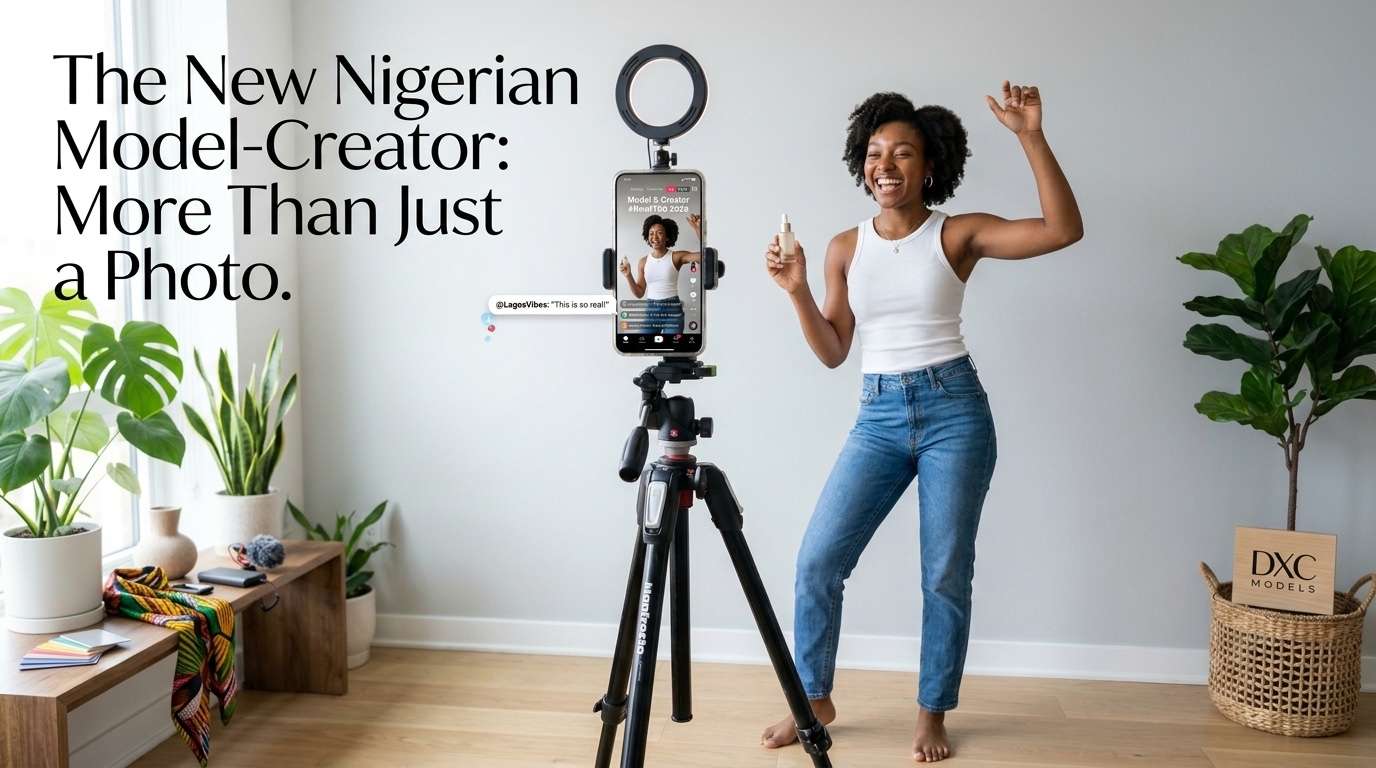
And increasingly, a person may be capable of doing both.
That hybrid is becoming interesting to brands.
Do You Need Thousands of Followers to Become a Model?
No.
Follower count should not determine whether somebody has modelling potential.
Runway suitability, facial features, body proportions, movement, camera presence, professionalism and ability to follow direction do not suddenly disappear because someone has 600 Instagram followers.
There are modelling jobs where your social following may have little or no relevance.
But there are also campaigns where a brand may see additional value in talent who can:
- appear in campaign images
- perform naturally on video
- speak confidently to camera
- create short-form content
- publish campaign material
- understand social platforms
- bring an engaged audience
That does not replace modelling ability.
It adds another skill set.
Why Brands Are Looking Beyond the Photograph
Consider how much advertising has changed.
A traditional campaign might once have needed:
one model + photographer + finished campaign images.
Today, that same campaign could potentially require:
photographs
vertical videos
behind-the-scenes clips
short-form social content
product demonstrations
creator commentary
UGC-style material
social posts
digital advertisements.
Creator-led campaigns have become increasingly important within Nigerian advertising. Recent industry activity in Lagos includes new influencer-focused agency services and platforms designed specifically around brands working with creators and social content.
That creates an interesting opportunity for models.
If two suitable models can both deliver the campaign photographs, but one is also confident making a natural 15-second product video, the second model may bring an additional type of value.
Not for every client.
Not for every campaign.
But increasingly, for some.
Your Social Media Can Become an Unofficial Introduction
Imagine a casting professional discovers you today.
What happens next?
There is a reasonable chance they may search your name or look at your social profile.
What will they find?
Your Instagram does not need to resemble a perfectly curated magazine.
But it can reveal things a comp card cannot:
your personality
your interests
your movement
your confidence
your taste
how you communicate
how comfortable you are on camera
how professionally you present yourself.
This is not exclusive to modelling. A current Vogue discussion about fashion-industry careers describes Instagram as increasingly functioning as an unofficial portfolio and personality filter in parts of the fashion business.
For models, that makes your public digital presence worth thinking about.
This Does NOT Mean Your Instagram Has to Look Perfect
In fact, trying too hard can create another problem.
Social platforms are becoming less interested in content that feels excessively manufactured.
TikTok’s 2026 trend forecast calls one major behaviour shift “Reali-TEA,” describing audiences as increasingly interested in honest experiences, real stories and relatable perspectives.
So a model does not necessarily need:
- endless professional photographs
- a luxury lifestyle
- expensive locations
- perfectly colour-coordinated feeds
- manufactured “influencer” behaviour
You need something much more difficult to fake:
a sense of who you are.
What Should a Model Actually Post?
You don’t have to turn your life into content.
Start with things that support your professional identity.
For example:
1. Your modelling work
Campaigns, test shoots, runway work, portfolio updates and published work.
2. Behind the scenes
Tasteful moments from shoots, fittings, rehearsals and preparation.
3. Movement
Runway clips, posing, commercial movement and natural camera presence.
4. Personality
Occasional content that allows people to understand something about you beyond still photographs.
5. Skills
Dance, fitness, acting, sport, beauty knowledge, fashion, public speaking or another relevant ability.
6. Clean everyday content
Not everything needs to look like a campaign.
Sometimes natural content can reveal exactly the personality a commercial client is searching for.
Your Social Media Is Not Your Portfolio
This distinction is equally important.
An Instagram profile should not replace:
- your proper portfolio
- professional polaroids
- measurements
- comp card
- agency profile
- casting materials
Your social account is an additional layer.
Think of it this way:
Portfolio = what you can do as a model.
Polaroids = what you currently look like.
Social media = another window into who you are and how you communicate.
Together, they can tell a more complete story.
What If You Don’t Like Posting Online?
You can still model.
There is no rule that says every professional model must document their life publicly.
And models should never feel pressured to expose private parts of their lives just to appear commercially attractive.
You can create a professional presence without turning your entire personal life into content.
That could mean maintaining a simple account containing:
- selected modelling work
- occasional professional updates
- clean video clips
- your interests
- relevant contact or representation information
You decide the boundary.
Don’t Buy Followers
If you decide to develop a social presence, chasing a fake number defeats the purpose.
Brands increasingly evaluate more than raw follower counts.
Nigeria-focused influencer-industry guidance increasingly emphasizes audience relevance, engagement, demographics, geography and measurable campaign outcomes rather than simply selecting whoever has the largest account.
Ten thousand fake followers cannot create genuine trust.
A smaller real audience can sometimes be more useful than a huge disengaged one.
Build slowly.
Professionalism Still Matters More Than Your Feed
Having a beautiful Instagram page does not excuse:
arriving late
ignoring briefs
being difficult on set
failing to communicate
missing fittings
behaving unprofessionally
failing to deliver agreed content.
In fact, the growing overlap between modelling and creator work can make professionalism even more important.
You may now be responsible not only for appearing in front of the camera, but potentially for delivering agreed content, respecting usage terms, following brand guidelines and meeting posting deadlines.
The model who understands the business of a campaign will always be more useful than the person who only understands how to look good in photographs.
Models Should Learn Basic Content Creation
This is one area where we think aspiring models should pay attention.
You don’t have to become a filmmaker.
But learn how to:
- speak naturally on camera
- shoot a clean vertical video
- find good natural light
- frame yourself properly
- make simple short-form content
- follow a content brief
- deliver usable files
- understand basic social-media etiquette
Those are increasingly transferable commercial skills.
Brands: Don’t Confuse Influence With Modelling Ability
There is also a message here for clients.
A large following does not automatically make someone the right model for a campaign.
Casting should begin with the campaign objective.
Do you need:
a fashion model?
a relatable commercial face?
a beauty model?
an actor?
a creator?
an influencer?
or someone capable of combining several roles?
Those are different requirements.
The strongest casting decision is not necessarily the person with the biggest audience.
It is the talent who best solves the campaign problem.
The Future May Be the Model-Creator
We are likely to see more overlap between the modelling and creator economies.
Recent creator-led Nigerian campaigns already demonstrate how much value brands can generate when personalities are allowed to interpret campaigns rather than simply appearing inside conventional advertising.
That does not mean the traditional model disappears.
It means modelling careers may become broader.
The future commercial model may be someone who can:
model
move
speak
create
communicate
and understand a brand brief.
For the right person, that creates more opportunity — not less.
DXC VIEW
You don’t need to become an influencer to become a model.
But in a market where brands increasingly need talent for photographs, video and social content, learning how to communicate and create can make you more versatile.
So, Do Models Need Social Media in 2026?
Need it? Not always.
Can it help? Absolutely.
Your follower count does not define your modelling potential.
But a thoughtful digital presence can make it easier for people to:
discover you,
understand you,
see your personality,
see how you move,
and imagine how you might fit a campaign.
Build your modelling skills first.
Then think about what additional value you can offer.
Because increasingly, the question may not simply be:
“Can this person model?”
It may also be:
“What else can this talent bring to the campaign?”
Interested in Developing Your Modelling Career?
DXC Model Management works with talent across modelling, development and emerging commercial opportunities.
Explore our resources, talent and application information through the official DXC website:
dxcmodels.com