Will AI Replace Models? What AI-Generated Models Mean for Nigerian Talent and Brands in 2026
Will artificial intelligence replace models?
It is becoming one of the most important questions facing the modelling and fashion industries.
Brands can now generate realistic human faces, place virtual people in clothing, create campaign variations without organising another photoshoot and even produce consistent digital personalities that do not physically exist.
That sounds threatening if your career depends on being hired to appear in photographs.
But the reality is more complicated.
AI may change what models are hired for, how their images are used and what rights need to be negotiated.
That is different from saying human models are simply disappearing.
AI Models Are Already Here
This is no longer theoretical.
Fashion companies are already experimenting with synthetic imagery, virtual talent and digital replicas of real people.
H&M publicly launched images featuring digital twins of real models in 2025, describing the project as a way to explore generative AI while maintaining a human-centred creative approach. One of the participating models described the process as professional, collaborative and transparent.
At the same time, virtual influencers are developing into businesses of their own, attracting brands partly because synthetic personalities can be controlled and scaled differently from human creators. Wired reported this week that the growth of AI influencers is now colliding with increasing demands for transparency and regulation.
So the relevant question is no longer:
“Will AI enter modelling?”
It already has.
The more useful question is:
“What happens to human models now?”
First: Not Every Modelling Job Has the Same Risk
AI is unlikely to affect every category of modelling equally.
Think about the difference between:
an e-commerce product photograph
and
a runway show.
One exists primarily to display a product.
The other involves movement, personality, atmosphere, live audiences, designers, photographers, press and human interaction.
Now compare:
hundreds of simple catalogue images
with
a major beauty campaign built around a recognisable personality.
Again, they serve very different purposes.
AI may therefore place greater pressure on some repetitive forms of image production than on modelling work where human personality, movement, credibility or cultural meaning is central to the campaign.
Human Presence Still Has Commercial Value
A human model brings things that are difficult to reduce to a generated image.
A person can:
- interact with a director
- respond to creative direction
- move naturally
- improvise
- walk a runway
- participate in an event
- speak to an audience
- create behind-the-scenes content
- build a following
- give interviews
- become associated with a brand
- create genuine cultural relevance
This connects directly to another change we discussed recently at DXC:
the increasing overlap between models and creators.
The more a campaign depends on personality, communication and community, the harder it becomes to treat talent as merely a replaceable image.
But AI Can Change Commercial Photography
This is where models should pay attention.
Imagine a fashion company needs the same garment presented:
in five countries,
against four backgrounds,
in three advertising formats,
and across dozens of digital placements.
Traditionally, producing all of those variations could require considerable photography, retouching and production.
Generative AI makes variation dramatically easier.
That means some brands may begin asking:
“Do we need another entire shoot for this?”
That does not necessarily eliminate the original human model.
It may instead create something new:
the digital twin.
What Is a Digital Twin?
In this context, a digital twin is a synthetic representation based on a real person.
The model exists.
The brand may photograph or scan them.
AI technology can then potentially create additional authorised representations of that person.
The commercial question becomes extremely important:
Who controls that digital version?
That is where the future becomes much more interesting for models and agencies.
Your Face May Become Something That Is Licensed
Traditionally, a modelling agreement might cover the use of particular photographs or videos.
For example:
A model completes a fashion shoot.
The client receives permission to use those photographs:
for six months,
in Nigeria,
on digital platforms.
Fairly straightforward.
But imagine the client takes those photographs and uses AI to generate:
a completely new pose,
a completely new outfit,
a new environment,
new body positioning,
or another advertisement that the model never physically participated in.
Is that still simply editing the original photograph?
Or has the brand created a new performance using the model’s likeness?
That distinction is already being tested.
A recently filed US lawsuit alleges that a fashion retailer exceeded the scope of a model’s licence by creating AI-generated or materially altered depictions showing the model in situations, poses and wardrobe presentations that she allegedly never authorised. The case is still at an early stage, so the allegations have not been finally resolved.
But the question it raises matters globally:
What exactly did the model give permission for?
Models Need to Start Thinking About Likeness
A modelling contract can no longer only be about:
“How much am I getting paid for this shoot?”
Models and their representatives increasingly need to understand:
Where can my image be used?
For how long?
In what countries?
Can the image be altered?
Can AI be used?
Can the client create new synthetic images of me?
Can my likeness be reused for future campaigns?
Can my face be placed on another body?
Can a digital replica of me be created?
These questions may eventually become normal parts of talent negotiations.
This Could Also Create a New Revenue Stream
AI does not necessarily have to mean:
brand saves money → model loses job.
There is another possible model:
model licenses their digital likeness → model gets paid for authorised additional usage.
H&M’s public digital-twin project provides one example of a fashion company developing AI imagery alongside the participation of real models rather than hiding the process from them.
That concept could potentially create an entirely new form of talent licensing.
A model might eventually be booked not only for:
shoot day + image usage
but potentially for:
shoot + physical performance + digital likeness licence + AI usage rights.
That is a very different conversation from simply “AI will replace models.”
The Agency’s Job May Change Too
Model management may eventually involve more than managing physical bookings.
Agencies could increasingly need to manage:
- likeness rights
- digital replicas
- AI permissions
- usage duration
- territories
- platforms
- synthetic derivatives
- renewal fees
- exclusivity
- brand conflicts
In other words, a model’s digital identity could become an asset that requires management.
Brands Also Need to Be Careful
AI creates opportunities for advertisers.
But convenience doesn’t eliminate responsibility.
If a campaign uses a recognisable person’s likeness, brands should understand exactly what permission they have obtained.
An agreement allowing a brand to edit a photograph may not necessarily answer every question surrounding the creation of entirely new synthetic depictions. The current US litigation around AI-altered fashion imagery illustrates why older talent agreements may not have anticipated these capabilities.
The safest future is likely one built around:
clear permission
clear usage
clear compensation
and clear disclosure.
Transparency Is Becoming More Important
Another major development happened this month.
On 2 August 2026, Article 50 transparency requirements under the European Union’s AI Act began applying to certain AI systems and AI-generated or manipulated content. Among other requirements, providers of generative systems face machine-readable marking obligations, while certain deepfake content must be disclosed.
These are European rules, not Nigerian modelling regulations.
But they reveal something important about where the wider digital environment is heading:
audiences increasingly expect to know when what they are seeing isn’t real.
For fashion and advertising, transparency could become part of consumer trust.
Would Consumers Care?
This may ultimately be one of the biggest questions.
Advertising works partly because people believe something about the person they are looking at.
Beauty advertising can imply:
this product helped create this appearance.
Fashion advertising can imply:
this garment actually fits and falls like this on a person.
Influencer marketing can imply:
this person actually experienced or recommends this product.
AI complicates all three.
Brands may discover that synthetic imagery works extremely well for certain applications while human talent remains more powerful when trust and identification matter.
Aspiring Models Should Not Panic
If you are starting your modelling career today, AI should not be the reason you stop.
Instead, it should influence how you prepare.
Develop the things that make you useful beyond a still photograph.
Learn:
movement.
communication.
video.
acting.
content creation.
professionalism.
personal branding.
how commercial campaigns work.
And most importantly:
learn what you are signing.
The future model may need to understand image rights almost as much as posing.
Don’t Sign Away Rights You Don’t Understand
This may become one of the most important lessons for the next generation of models.
If a contract contains language about:
AI,
synthetic media,
digital replicas,
derivative works,
likeness,
perpetual usage,
or broad rights to alter your image,
ask what those terms actually permit.
For significant commercial contracts, professional legal advice may be appropriate.
Technology may change.
Your face is still yours.
What Should Nigerian Brands Take From This?
AI offers legitimate opportunities.
It can help brands experiment creatively, generate variations and potentially reduce some production barriers.
But brands should not view models merely as raw material for unlimited synthetic content.
The healthier approach is partnership.
If you want someone’s identity to continue creating value after the physical shoot ends, the commercial agreement should properly address that use.
That protects:
the model,
the agency,
the brand
and ultimately the campaign.
DXC VIEW
AI does not automatically mean the end of modelling.
It may mean the beginning of a new category of modelling rights.
The conversation should move beyond “Will AI replace models?” to “Who owns the digital model, who controls the likeness and who gets paid when it is used?”
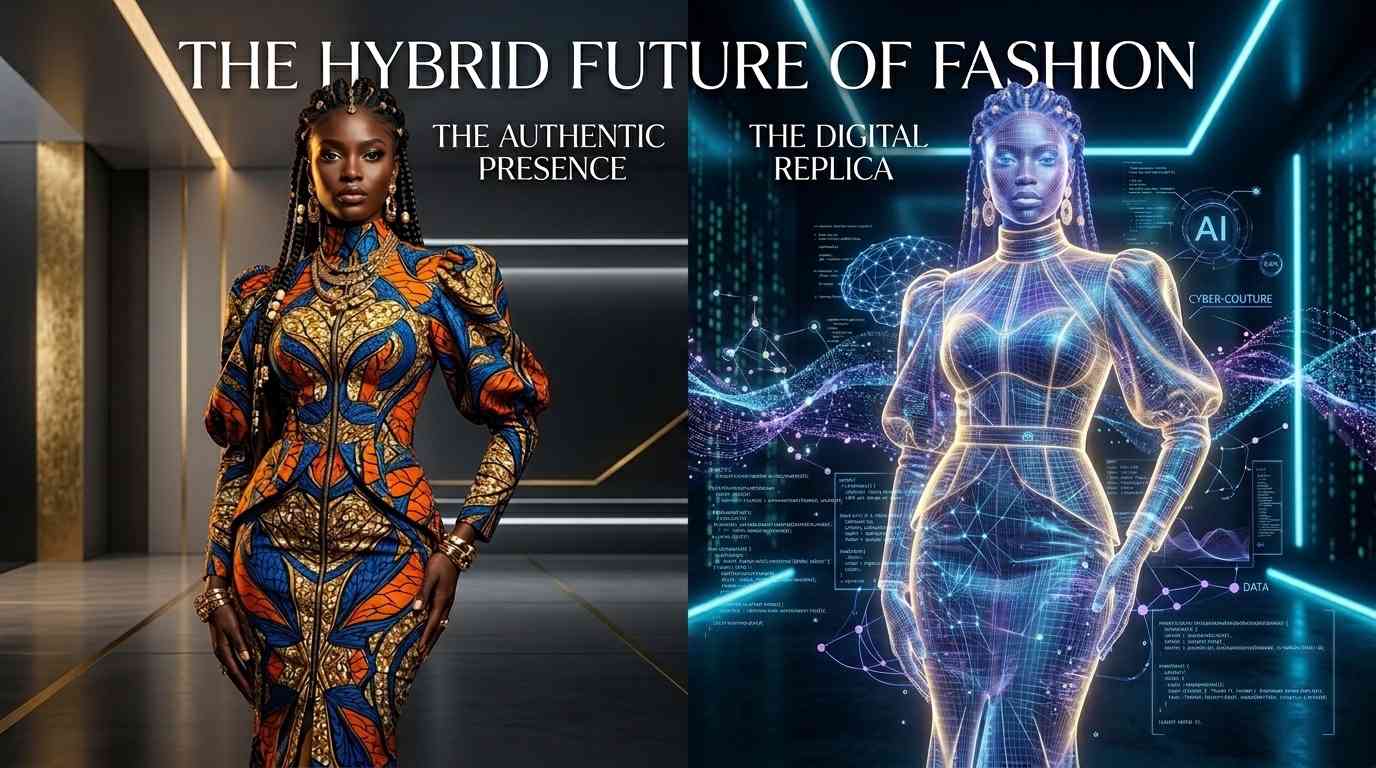
The Future Is Probably Hybrid
We don’t believe the useful question is:
human OR AI?
The fashion industry is already showing signs that it can become:
human + technology.
Physical models.
Digital twins.
Creators.
Virtual talent.
Synthetic campaign assets.
Traditional photography.
AI-assisted production.
Different campaigns will use different combinations.
What matters is ensuring the technology develops alongside consent, transparency, professionalism and fair commercial agreements.
Because the model of the future may not only have a portfolio.
They may eventually have a digital likeness with commercial value of its own.
What do you think?
Would you allow a brand to create an AI version of you if you were properly credited, protected and paid for every authorised use?
DXC will continue exploring how technology, advertising and changing consumer behaviour are reshaping modelling careers.
Visit dxcmodels.com for more industry insights, model education and talent information.