DXC MODELS | RUNWAY & MODEL DEVELOPMENT
What Is Runway Modeling? A Beginner’s Guide to Runway Models in 2026
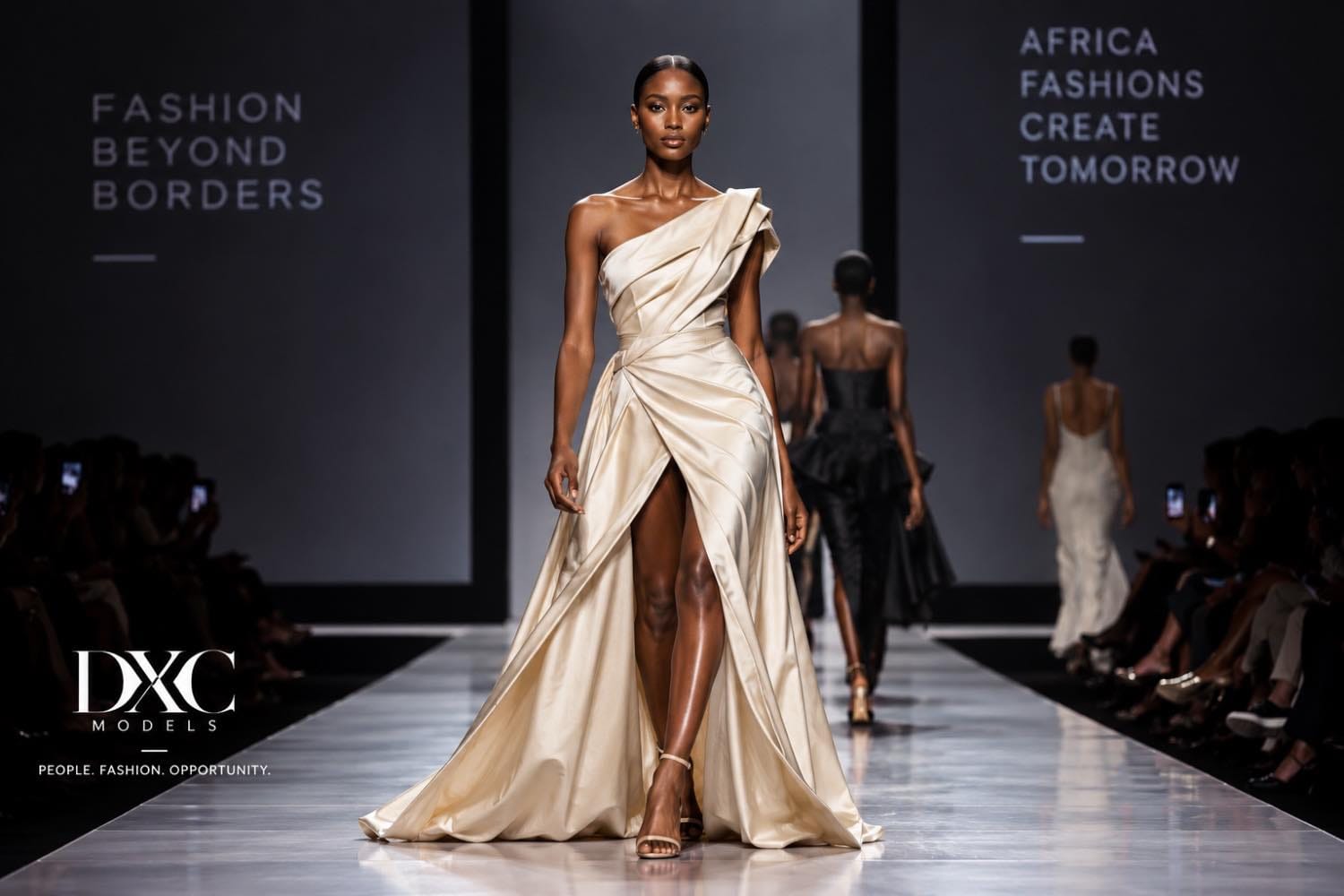
What is runway modeling? Runway modeling is the professional presentation of clothing, accessories or a designer’s collection by models walking in a fashion show. The model’s job is not simply to look attractive. It is to present the garment clearly, move according to the show’s direction and help communicate the designer’s creative vision.
If you have ever watched models walk during a fashion week, designer showcase or collection launch, you have seen runway modeling.
It is also commonly called catwalk modelling.
From the audience, the job can look simple.
Walk.
Turn.
Walk back.
But professional runway work involves much more than that.
A runway model is not walking to show themselves. They are walking to show the clothes.
What Is a Runway Model?
A runway model is a model hired to present fashion garments or accessories during a live fashion presentation.
Depending on the show, a runway model may work for:
- Fashion designers
- Fashion weeks
- Luxury brands
- Ready-to-wear brands
- Bridal designers
- Emerging designers
- Fashion schools
- Retail companies
- Corporate fashion events
The model usually wears clothing selected and styled by the designer or production team and walks a predetermined runway route in front of an audience, photographers, buyers, media or invited guests.
What Does a Runway Model Actually Do?
The obvious answer is walk.
But that is only part of the job.
A runway model may need to:
- Attend a casting
- Attend fittings
- Learn the show’s walking direction
- Wear unfamiliar or difficult garments
- Walk in different shoes
- Change outfits quickly backstage
- Follow instructions from the show director
- Maintain timing with other models
- Present the garment correctly
- Remain composed in front of an audience
The model is part of a larger production.
That means discipline and timing matter just as much as the walk itself.
Runway Modeling vs Taking Fashion Pictures
Runway modelling and fashion photography are related, but they require different skills.
During a photoshoot, a photographer may pause, adjust the model and take multiple frames.
During a runway show, the model is performing live.
There may be no second attempt.
The model needs to remember:
- Where to enter
- Where to stop
- When to turn
- The pace of the walk
- The required formation
- How the garment should move
That is why someone who photographs beautifully is not automatically a strong runway model.
What Is the Purpose of Runway Modeling?
The main purpose of runway modeling is to present fashion in motion.
A photograph can show what a garment looks like while standing still.
A runway show can reveal:
- How the fabric moves
- How the garment sits on the body
- The length and silhouette
- The designer’s styling
- How different pieces work together as a collection
- The overall mood of the brand
The model therefore needs to complement the garment rather than overpower it.
What Are the Requirements to Be a Runway Model?
There is no single worldwide rule that determines who can walk every runway.
Requirements depend on the designer, sample garments, market, production and type of show.
Traditional high-fashion runway casting has historically favoured taller models whose measurements fit standard designer samples.
However, not every runway show follows the same requirements.
Today, different shows may cast:
- Traditional fashion models
- Curve models
- Petite models
- Mature models
- Commercial models
- Children
- Models with distinctive looks
DXC Note: Never assume that one height or size automatically qualifies or disqualifies you from every runway job. Read the actual casting brief.
Do Runway Models Have to Be Tall?
Height is still relevant for many runway castings, particularly where designers are working with traditional fashion sample sizes and want visual consistency across a collection.
But there is no universal height requirement for every runway show in Nigeria or internationally.
A casting may specify a minimum height.
Another designer may prioritise a particular look.
A commercial fashion presentation may use a much wider range of talent.
The correct approach is simple:
Check the requirements of the specific casting.
Do not apply to a casting that clearly specifies requirements you do not meet and then expect the production to change the brief for you.
Why Do Measurements Matter in Runway Modeling?
Measurements matter because most runway clothes already exist before the model is selected.
The designer may have one sample of a garment.
That garment needs to fit the person wearing it during the show.
This is why castings may request:
- Bust or chest
- Waist
- Hips
- Dress size
- Trouser size
- Shoe size
- Height
Giving false measurements does not help.
If the garment does not fit during the fitting, the problem becomes obvious immediately.
What Happens at a Runway Casting?
A runway casting allows the designer or casting team to evaluate whether a model is suitable for the show.
The model may be asked to:
- Introduce themselves
- Provide their measurements
- Walk towards the casting team
- Turn
- Walk back
- Repeat the walk differently
- Try on a garment
- Take simple casting photographs
The casting team may be looking at much more than beauty.
They may assess:
- Walk
- Posture
- Proportions
- Confidence
- Ability to take direction
- Garment fit
- Presence
- Professionalism
We break this down further in our guide on what fashion-week castings actually test.
How Should a Runway Model Walk?
There is no single runway walk suitable for every designer.
A model’s walk should respond to the clothes and the show’s creative direction.
A dramatic couture collection may require a different pace from relaxed streetwear.
A bridal gown with a long train cannot always be walked in the same way as a fitted mini dress.
But strong runway fundamentals usually include:
- Controlled posture
- Balance
- Confidence
- Consistent pace
- Natural arm movement
- Awareness of the garment
- Clean turns
- Ability to follow direction
1. Work on Your Posture
Good runway posture should look strong without appearing stiff.
Your shoulders should feel relaxed.
Your body should remain controlled.
Your head should not constantly move around looking at the audience.
The goal is presence.
Not tension.
2. Control Your Pace
Walking faster does not automatically make your walk stronger.
Walking extremely slowly does not automatically make it luxurious either.
Your pace needs to suit the show.
More importantly, it should remain controlled.
If you are walking with several models, poor timing can affect the spacing of the entire runway.
3. Learn to Walk in Different Shoes
You may not always get your favourite shoes.
A runway model should gradually become comfortable walking in different footwear appropriate to the jobs they pursue.
This might include:
- High heels
- Boots
- Flats
- Sandals
- Trainers
- Unusual designer footwear
Never wait until the actual show to discover that you cannot walk safely in the shoes you have been given.
4. Learn How to Turn
A good turn should look intentional.
A weak turn can interrupt an otherwise strong walk.
Practice:
- Stopping with control
- Maintaining balance
- Turning without unnecessary movement
- Continuing smoothly after the turn
The exact turn may change according to the choreography of the show.
5. Understand the Clothes You Are Wearing
This is one of the most overlooked runway skills.
A model needs to feel what the garment is doing.
Is the dress dragging?
Is the train caught under your shoe?
Is the jacket supposed to remain open?
Does the skirt need more movement?
Is the garment delicate?
The clothes are the reason you are on the runway.
6. Learn to Take Direction Quickly
You may have developed your own runway walk.
That does not mean every designer wants it.
A show director may tell you:
Slower.
Less movement.
More attitude.
No pose at the end.
Walk straight through.
Stop here.
A professional model should be able to adjust.
Your signature walk should never become an excuse for ignoring the designer’s direction.
7. Practice Without Turning Practice Into Performance
Runway training is useful.
But beginners sometimes practise so many dramatic movements that their walk becomes unnatural.
Start with fundamentals:
Posture.
Balance.
Pace.
Turns.
Awareness.
Then develop versatility.
What Should You Wear to a Runway Casting?
Always follow the casting instructions first.
If no specific outfit is requested, the goal is usually to let the casting team see your proportions and movement clearly.
Simple, fitted clothing is often more useful than an elaborate outfit.
Avoid clothing that hides your body completely.
Female models may also be asked to bring heels.
Male models may be asked to wear clean, simple footwear appropriate for walking.
Do not arrive looking as though you are already attending the fashion show as a guest.
You are there to be assessed.
Do You Need Professional Photos Before Applying for Runway Jobs?
Not necessarily.
Many castings are more interested in seeing your current appearance clearly than seeing heavily produced photographs.
This is where modelling polaroids become important.
They allow casting teams to see your face, body and proportions without heavy styling or editing.
If you are still learning how to create them, read our guide on how to take modelling polaroids at home.
Do Runway Models Need Instagram Followers?
No.
A fashion designer can book a runway model who has a small social media following if that model fits the collection and performs well.
Follower count is a different type of commercial value.
If a brand wants you to post content to your audience as part of the agreement, that should be stated separately.
For a traditional runway casting, your walk, look, measurements, professionalism and ability to fit the brief may matter much more.
What Happens at a Runway Fitting?
Being cast does not always mean the process is finished.
The designer may invite you for a fitting.
During the fitting, the production team checks:
- Which garment fits you
- Whether alterations are required
- Which shoes and accessories you will wear
- How the garment behaves when you move
- Whether you remain suitable for the final look
Be punctual.
Follow instructions.
Handle the clothes carefully.
And do not assume fitting day is optional simply because you already attended the casting.
What Happens Backstage at a Fashion Show?
Backstage can be very different from the polished experience the audience sees.
There may be:
- Hair and makeup teams
- Dressers
- Designers
- Stylists
- Multiple models changing simultaneously
- Last-minute alterations
- Running orders
- Quick changes
- Show callers
Models need to remain alert.
Listen for your name or look number.
Know what you are wearing.
Know who comes before you.
Know where you need to be.
A strong runway model does not become impossible to find five minutes before their entrance.
What Is a Runway Model’s Biggest Job?
To make the clothes work.
Not to compete with them.
The audience should be able to see the designer’s idea clearly through your performance.
This is why different collections can require completely different energy from the same model.
Runway Modeling vs Commercial Modeling
Runway modelling primarily presents fashion live.
Commercial modelling is usually broader and may involve advertising products or services through photographs, video or performance.
A strong commercial model may need facial expression, acting ability and relatable performance.
A strong runway model may need exceptional movement, timing, posture and garment awareness.
Some models can do both.
Others naturally perform better in one category.
Neither category is automatically more legitimate than the other.
Can Beginners Become Runway Models?
Yes, beginners can develop runway skills.
You are not expected to know everything on your first day.
But you should be willing to learn.
A beginner can start by working on:
- Posture
- Walking technique
- Turns
- Confidence
- Body awareness
- Following directions
- Basic casting etiquette
Model training can help, but practice should prepare you for real casting and production environments rather than simply teach dramatic walking routines.
How Do You Become a Runway Model in Nigeria?
There is no single route.
A practical starting process may include:
1. Understand your likely modelling categories.
2. Take current, clean polaroids.
3. Know your accurate height and measurements.
4. Develop your runway fundamentals.
5. Build a professional casting profile.
6. Apply for legitimate castings you genuinely fit.
7. Learn from each casting and continue developing.
For a wider introduction to entering the Nigerian modelling industry, read How to Become a Model in Nigeria in 2026.
You should also build a professional digital casting profile so clients and casting teams can quickly understand whether you fit a brief.
Common Runway Mistakes Beginners Make
- Walking too fast
- Looking constantly at the floor
- Overdoing hip movement
- Using exaggerated poses for every show
- Forgetting the garment
- Ignoring casting instructions
- Trying to copy another model exactly
- Arriving without the requested shoes or clothing
- Giving inaccurate measurements
- Ignoring corrections from trainers or show directors
Confidence is important.
But confidence without control can become distraction.
Is Runway Modeling Difficult?
It can be.
Runway work requires physical control, confidence, discipline, adaptability and the ability to perform in real time.
Castings can also be competitive.
You may perform well and still not be selected because another model fits the garment or creative direction better.
That is part of the wider reality of a modelling career, which we discuss in What Are the Challenges of Being a Model?.
Frequently Asked Questions About Runway Modeling
What is runway modeling?
Runway modeling is the presentation of fashion clothing or accessories by models walking during a live fashion show. The model helps the designer show how the garments look and move on the body.
What is a runway model?
A runway model is a professional model hired to wear and present a designer’s clothing or accessories during a fashion show or live fashion presentation.
What is another name for runway modeling?
Runway modeling is also commonly called catwalk modelling.
Do runway models need to be tall?
Many traditional fashion castings specify height requirements because of sample sizing and creative direction, but there is no single height requirement that applies to every fashion show.
Can I become a runway model with no experience?
Yes. Beginners can develop runway skills through training, practice and suitable casting opportunities. You still need to meet the requirements of the individual jobs you apply for.
Do runway models get paid?
Some runway jobs are paid, while rates and arrangements vary according to the designer, production, market, show and model’s professional level. Models should understand the terms of each booking before accepting it.
Do you need an agency to become a runway model?
Not every beginner starts with agency representation, but reputable agencies can help with development, casting opportunities, contracts and professional representation. Models should still understand the industry and verify opportunities carefully.
The DXC View
A runway walk is not about creating the biggest performance in the room.
It is about control.
It is about understanding the garment.
It is about responding to direction.
And it is about being professional enough to become part of a live production where everybody’s timing affects somebody else.
The strongest runway model is not always the person doing the most.
Often, it is the person who understands exactly what the clothes and the show require.
The runway is not simply a place to show your walk. It is a place to show the designer’s work through your walk.
Want to Develop Your Runway Skills?
DXC Models works with aspiring and developing models in Lagos through professional model development, training and industry guidance.