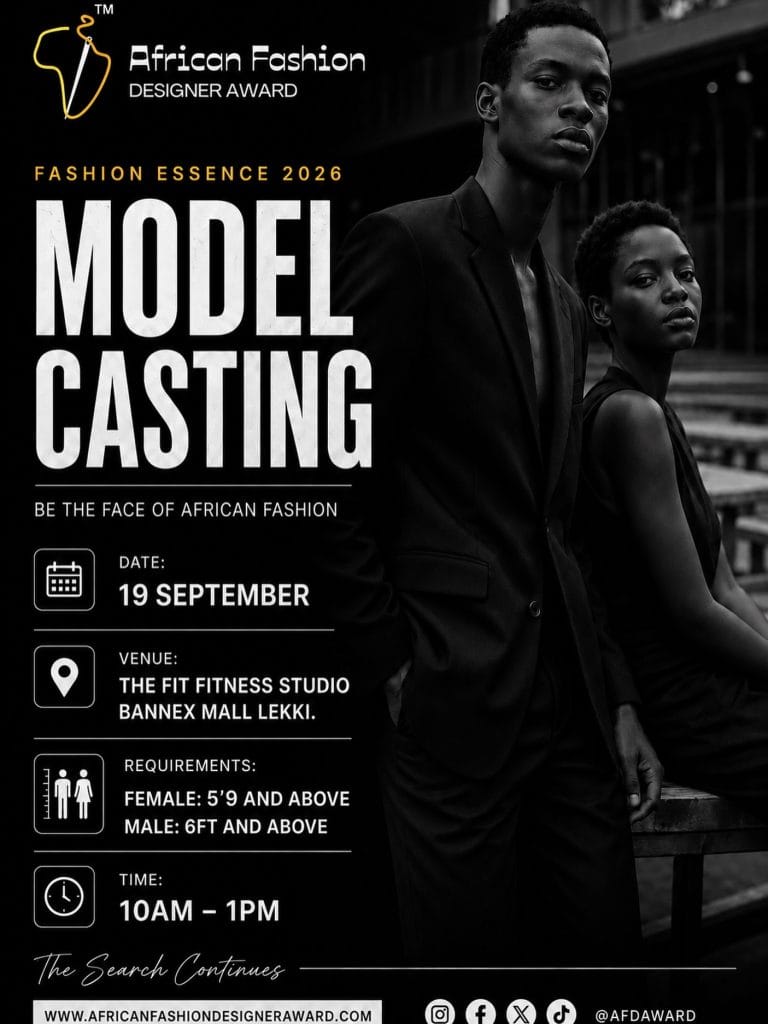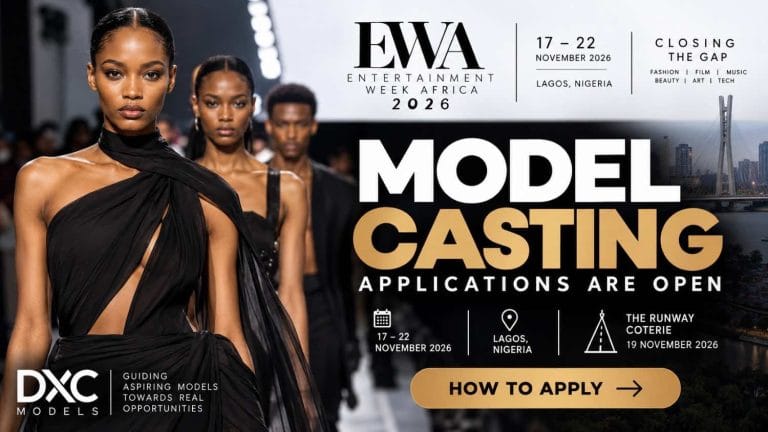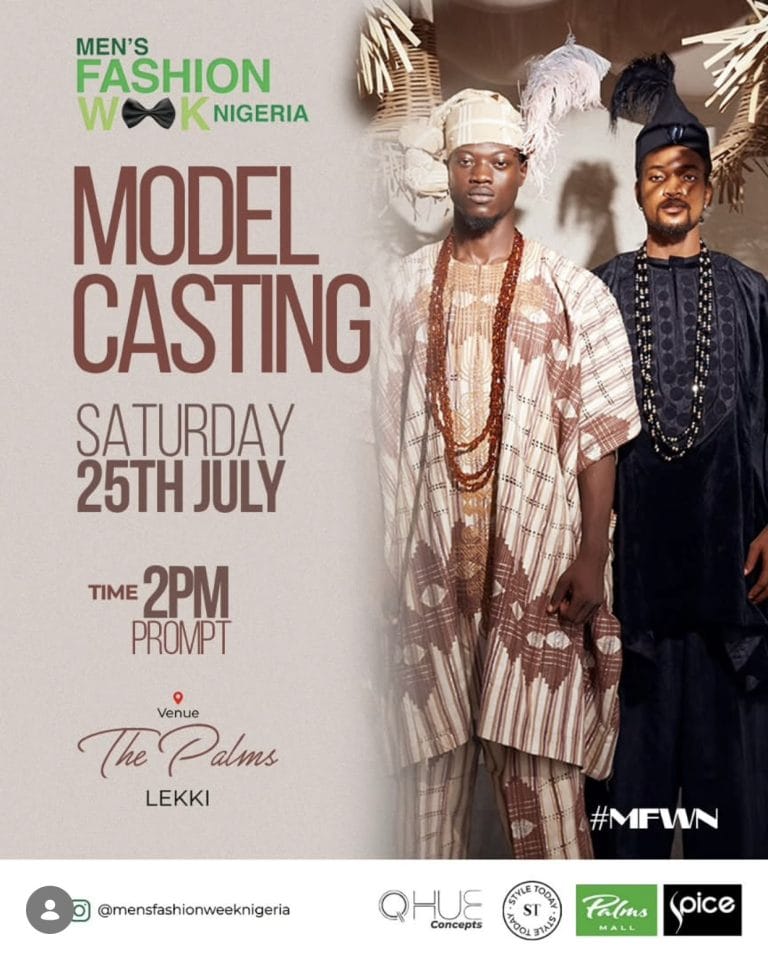

More than 600 models reportedly turned up for the recent Nigeria Fashion Week 2026 model casting.
Only about 80 models were required.
That means hundreds of people could walk into the same room wanting essentially the same opportunity.
For an aspiring model, numbers like that can be intimidating.
But they also reveal something important about professional modelling:
Looking like a model is only the beginning.
At a competitive fashion-week casting, the people making the selection may have only a short amount of time to decide whether you fit what they need.
So what are they actually looking at?
First, an important clarification.
We were not part of the Nigeria Fashion Week selection panel, and every designer, casting director and fashion event may use different criteria.
This is not an explanation of why any particular person was selected or rejected at that casting.
It is a guide to the things runway castings generally assess and what aspiring models can learn from a highly competitive turnout.
1. You Are Not Only Being Judged on Beauty
This is one of the first misconceptions aspiring models need to remove.
A casting is not simply:
Who is the prettiest woman?
or:
Who is the most handsome man?
Fashion modelling has a job to do.
The model has to present a designer’s clothes, fit the creative direction and function within the requirements of the show.
That means a person can be extremely attractive and still not be right for a particular runway booking.
Another model may have a less conventional face but fit exactly what the designer or casting team is searching for.
Beautiful does not automatically mean bookable for every job.
2. Your Walk Matters
For runway modelling, your walk is part of your professional skill set.
Casting teams may pay attention to things such as:
- pace
- balance
- posture
- confidence
- control
- turns
- how naturally you move
- whether your walk suits the presentation
And this is where preparation becomes obvious.
There is a difference between someone who has practised walking professionally and somebody simply trying to imitate what they have seen on social media.
A strong runway walk should not look like you are fighting your own body.
It should feel controlled.
If runway is a category you genuinely want to pursue, practise before casting season arrives.
3. Proportions and Measurements Can Matter
Runway is one area of modelling where physical requirements can be particularly important.
Designers often produce runway samples within specific sizing and proportion ranges.
That means measurements, height and overall proportions may influence whether a model can wear the available garments.
This is not the same as saying:
“Only one body type can be a model.”
Commercial, beauty, lifestyle, curve, e-commerce and other categories can operate very differently.
But if you are attending a runway casting, understand the requirements of the category you are applying for.
Sometimes a rejection is not a judgement of your attractiveness or potential.
It may simply mean:
you do not fit this particular garment or brief.
4. Posture Can Change How You Are Seen Immediately
Before you even begin walking, your posture is communicating something.
Are your shoulders collapsed?
Are you looking at the floor?
Are you standing confidently?
Do you look uncomfortable in the room?
Do you appear prepared?
Good posture can make a model look more composed before the casting team has seen anything else.
This does not mean walking into the room behaving arrogantly.
There is a difference between confidence and performance.
You want to appear:
present, composed and ready.
5. Can You Follow Instructions?
This is one of the most underrated modelling skills.
A casting director may ask you to:
walk again,
slow down,
turn differently,
remove something,
change your expression,
stand somewhere else,
or present yourself in a particular way.
How quickly do you adapt?
If somebody gives you a simple instruction and you immediately ignore it because you want to show them “your own style”, that can become a problem.
Professional models do not only perform.
They take direction.
And that skill becomes even more important once you are actually booked.
6. Your Presentation Matters
Casting clothes are usually supposed to allow the team to see you clearly.
This is generally not the time to wear something that completely hides your proportions or distracts from your appearance.
Likewise, excessive accessories, highly distracting styling or an appearance that makes it difficult to assess you may work against the purpose of the casting.
Always follow the organiser’s stated requirements first.
If they specify:
particular clothing,
shoes,
hair,
makeup,
documents,
or photographs,
follow the brief.
Being able to follow submission and casting instructions is already part of demonstrating professionalism.
7. Your Polaroids Should Actually Look Like You
If photographs are requested, they should represent your current appearance accurately.
A casting team should not receive one person in the application and meet somebody completely different in the room.
Avoid relying on:
- beauty filters
- aggressive retouching
- face reshaping
- body reshaping
- photographs from years ago
Your current polaroids should make assessment easier, not harder.
If you are unsure how to create them, read our guide: How to Take Modelling Polaroids at Home With Your Phone.
8. Confidence Matters — But So Does Control
A casting room with hundreds of models can make even a confident person nervous.
You may be surrounded by:
taller people,
more experienced models,
people with stronger portfolios,
people who look completely different from you.
Trying to compete with everybody in the room can make your performance worse.
Your job is not to become the other 599 people.
Your job is to present yourself properly during the short opportunity you receive.
Confidence in casting is not:
“I know I am better than everybody here.”
It is:
“I am prepared to show what I can do.”
9. Professional Behaviour Begins Before You Get Booked
People sometimes behave as if professionalism starts once money enters the conversation.
It starts much earlier.
At a casting, professionalism can include:
- arriving within the required time
- following registration instructions
- respecting organisers
- waiting appropriately
- avoiding unnecessary disruption
- listening when instructions are given
- being prepared
- communicating properly
The modelling industry is smaller than it sometimes appears.
People remember talent they enjoy working with.
They also remember unnecessary difficulty.
10. One Casting Does Not Define Your Modelling Career
This may be the most important point.
If more than 600 models attend a casting and only around 80 are required, mathematically, most of the people who attended cannot be selected.
That does not mean hundreds of them have no modelling potential.
A casting is a selection for a particular opportunity at a particular time.
You can be:
a good model,
well trained,
professional,
and still not fit that specific brief.
This is part of the industry.
The question after rejection should not always be:
“What is wrong with me?”
A better question is:
“What can I improve, and what kind of opportunities am I actually suited for?”
11. Don’t Wait for a Major Casting Before You Start Preparing
One common mistake aspiring models make is waiting until a casting flyer appears before suddenly trying to learn everything.
The announcement comes out on Thursday.
Casting is Saturday.
Then suddenly:
“How do I walk?”
“What should I wear?”
“What are polaroids?”
“How should I pose?”
“What measurements do I need?”
That is late preparation.
If you want to pursue runway modelling seriously, development should happen before the opportunity arrives.
Work on:
- posture
- runway walk
- turns
- confidence
- polaroids
- measurements
- basic casting etiquette
- understanding your category
- taking direction
Then when an opportunity appears, you are applying what you already know rather than learning everything the night before.
For more runway-specific development advice, read Mastering the Art of Runway Modeling: Tips from DXC Model Academy.
You can also read Mastering Modeling Auditions: Tips and Tricks for Aspiring Models for more casting preparation guidance.
12. Not Every Casting Is Your Casting
Another part of becoming professional is knowing where you fit.
An opportunity being popular does not automatically mean it is right for you.
Before attending, ask:
What category is this casting for?
Do I meet the stated requirements?
Does this opportunity fit the direction I am building?
Is the casting legitimate and independently verifiable?
Am I prepared for what they are asking me to do?
Going to every available casting without understanding your category can lead to unnecessary frustration.
Good career development includes knowing where your strengths are most commercially useful.
DXC VIEW
A crowded casting is not a beauty competition.
It is a selection process for a specific job.
Preparation, suitability, professionalism and the ability to deliver the brief can matter just as much as appearance.
What Models Should Take From the 600-to-80 Reality
More than 600 people wanting roughly 80 opportunities tells us something very clearly:
competition exists.
But the answer is not panic.
The answer is preparation.
Know your category.
Develop your skills.
Keep your photographs current.
Learn to take direction.
Understand casting etiquette.
Take care of your presentation.
And remember that not being selected for one show does not mean there is no place for you in modelling.
A professional career is built through multiple opportunities, development and consistency, not one casting result.
Want to Prepare More Professionally for Castings?
DXC Model Management provides modelling education, development resources and industry guidance for aspiring and working talent.
Explore our casting guides, model-development resources and opportunities at:
dxcmodels.com
And if you are considering a casting you found online, always verify the organiser and opportunity through official channels before travelling, paying or sharing sensitive information.