Model Development · DXC Beginner Guide
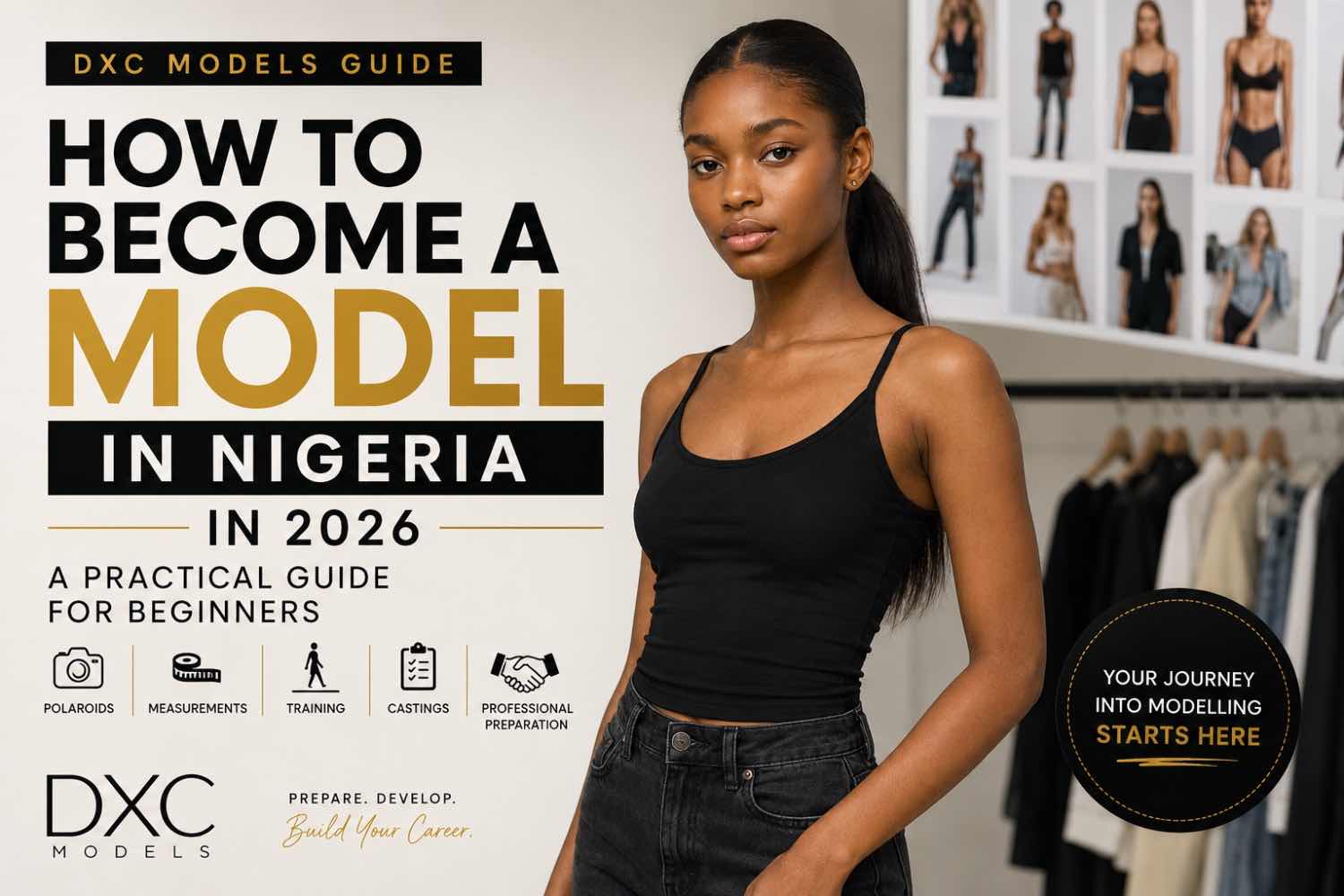
How to Become a Model in Nigeria in 2026: A Practical Guide for Beginners
If you want to become a model in Nigeria, the first step is not buying an expensive photoshoot, chasing every casting flyer or waiting for someone to discover you. Start by understanding where you fit, preparing the right materials and learning how the industry actually works.
DXC Models
What Does It Actually Mean to Become a Model?
Modelling is not simply taking attractive photographs.
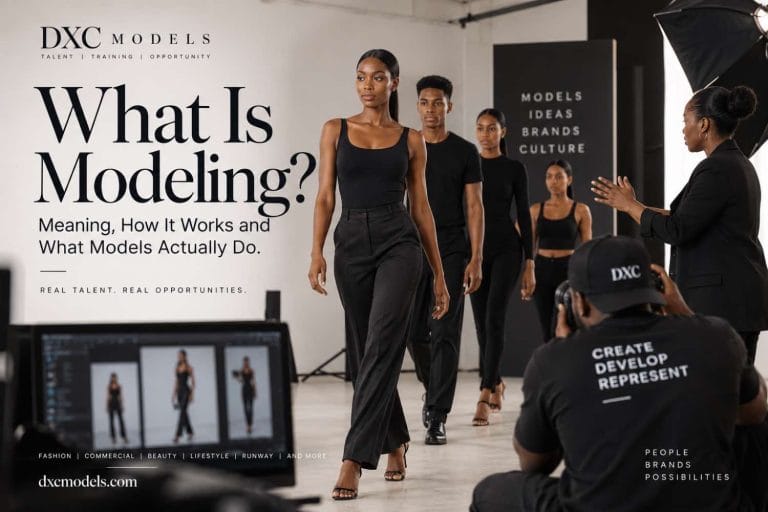
A working model may be required to represent fashion, beauty, lifestyle, advertising, products or creative concepts through appearance, movement, expression and performance.
Depending on the job, you may need to walk a runway, pose for still photography, interact with a product, work on video, take direction quickly or repeat an action several times for a commercial.
That means becoming a model is partly about your look, but it is also about developing professional ability.
01
Understand Which Type of Modelling Fits You
There is no single type of model.
Different parts of the industry require different looks, measurements, ages, personalities and abilities.
- Commercial modelling
- Fashion modelling
- Runway modelling
- Editorial modelling
- Beauty modelling
- Lifestyle modelling
- Curve and plus size modelling
- Kids modelling
- Fitness modelling
- Parts modelling
You may fit naturally into more than one category.
The mistake is assuming that because you do not match one traditional runway standard, there is automatically no place for you in modelling.
Ask what you naturally offer. Is it fashion proportions, a strong commercial look, expressive personality, beauty features, movement, an athletic body, curve representation or something else?
02
You Do Not Need Professional Photos to Apply Everywhere
One of the biggest misconceptions among beginners is that they must first spend heavily on a professional portfolio.
Often, what an agency initially needs is something much simpler.
Clean, current photographs that show what you genuinely look like.
These are often called polaroids or digitals.
Basic polaroids usually include:
- Clear headshot
- Full body photograph
- Side profile
- Natural smiling photograph
- Neutral expression
Avoid filters, heavy retouching, dramatic makeup and complicated backgrounds.
You can even take good beginner polaroids with a phone and natural light.
Read the full DXC guide:
How to Take Modelling Polaroids at Home With Your Phone
.
03
Know Your Current Measurements
Do not guess your measurements when an agency or casting asks.
Depending on the job, you may be asked for information such as:
- Height
- Bust or chest
- Waist
- Hips
- Shoe size
- Dress or clothing size
Measurements help agencies and clients understand whether you fit garments, samples or particular campaign requirements.
Keep them current.
04
Learn How to Use Your Body and Face
Potential alone is not the same as readiness.
Begin developing:
- Posture
- Body control
- Facial expression
- Hand placement
- Movement
- Angles
- Runway fundamentals where relevant
- Camera confidence
Do not focus only on memorising random poses from Pinterest or Instagram.
A useful model needs to understand how to change movement and expression based on the brief.
05
Commercial Models Should Practise More Than Posing
Commercial campaigns increasingly involve both photography and video.
A model may need to pick up a product naturally, walk into frame, deliver an expression, repeat an action or speak briefly to camera.
That is why beginners should also practise movement and taking direction, not only finished poses.
If you want to understand this better, read:
Why Commercial Models Need More Than Poses in 2026
.
06
Learn How Castings Work Before Attending One
Do not wait until you arrive at your first casting to discover what a casting is.
Depending on the brief, you may be assessed on:
- Your appearance
- Walk
- Measurements
- Movement
- Camera presence
- Ability to take direction
- Confidence
- Professionalism
Your clothing should usually be simple enough for the casting team to see your proportions clearly, unless the brief tells you otherwise.
Read:
How to Prepare for a Modeling Audition
.
DXC Models
07
Do Not Apply to Every Opportunity You See
A professional looking flyer does not automatically make a casting genuine.
Before paying money, travelling somewhere unfamiliar or sharing sensitive information, verify the opportunity.
Ask:
- Who is organising it?
- Can you verify the company or agency?
- Does the venue make sense?
- Is the opportunity also mentioned on an official page?
- What exactly is being requested from applicants?
- Are payments clearly explained?
Importantly, charging for legitimate training, photography or development does not automatically mean an agency is fake.
The problem is when payments are unclear, misleading or tied to unrealistic guarantees of modelling jobs.
Read:
Fake Modelling Agencies in Nigeria: 7 Red Flags Aspiring Models and Parents Should Know
.
08
Understand the Difference Between Development and Representation
A beginner may need training, polaroids, portfolio development, casting preparation or confidence building before being competitive for professional work.
That is model development.
Representation is different.
A modelling agency representing you commercially may submit you for suitable jobs, negotiate bookings, manage client relationships and guide parts of your career.
Development does not automatically guarantee representation.
Representation does not automatically guarantee bookings.
A serious aspiring model should understand that distinction.
09
Do Models Need Social Media?
Not every model needs thousands of followers.
Your follower count does not determine whether you have modelling potential.
However, your online presence can still influence how people encounter you professionally.
An agency, photographer, brand or casting director may search your name.
A useful professional presence can help them see:
- Your current appearance
- Your personality
- How you move
- Your interests
- Your communication style
- Whether you appear reliable and professional
You do not have to become an influencer.
Read:
Do Models Need Social Media in 2026?
.
10
Build a Portfolio When You Are Ready for One
Polaroids and a portfolio are not the same thing.
Polaroids show what you currently look like.
A portfolio begins to show what you can actually do as a model.
That may include fashion, beauty, editorial or commercial images depending on your direction.
Do not fill a portfolio with ten photographs that all show exactly the same expression and styling.
The goal is not simply quantity.
The goal is useful range.
11
Learn the Business Before Signing Things You Do Not Understand
As opportunities become more commercial, paperwork becomes more important.
Models should gradually learn basic concepts such as:
- Booking fees
- Agency commission
- Usage
- Territory
- Duration
- Exclusivity
- Image rights
- Cancellation terms
AI has added another layer to this conversation because contracts may increasingly include digital likeness or synthetic image rights.
Read:
Before You Sign: 7 AI Questions Models Should Ask About Their Image Rights
.
12
Do Not Build Your Entire Life Around Your First Casting
Modelling can involve rejection, inconsistent bookings and periods when opportunities are quiet.
Being rejected from one job does not automatically mean you cannot model.
Sometimes the client simply needed:
a different height,
a different clothing size,
a different age,
a different face,
or a different personality for that particular campaign.
Treat modelling like a professional journey, not a lottery ticket.
You do not become a professional model because somebody called you beautiful. You become professionally useful by understanding your market, developing your skills, presenting yourself properly and being prepared when the right opportunity appears.
A Simple 30 Day Starting Plan
Week 1: Understand yourself
Research modelling categories. Take your measurements. Identify where you may naturally fit.
Week 2: Create your basic materials
Take clean polaroids. Prepare your basic information and a simple professional introduction.
Week 3: Practise
Work on posing, movement, runway if relevant, expressions and camera confidence.
Week 4: Start applying intelligently
Research agencies and legitimate opportunities. Apply through official channels and keep improving while you wait.
Frequently Asked Questions
Do I need to be tall to become a model in Nigeria?
Not for every modelling category. Certain runway and fashion markets may have specific height expectations, but commercial, beauty, lifestyle, curve, kids and other categories can have very different requirements.
Do I need professional photographs before approaching an agency?
Not always. Many agencies can initially assess you using clean, current polaroids or simple phone photographs.
Do I need thousands of Instagram or TikTok followers?
No. A large audience can add value for certain campaigns, but follower count is not the same thing as modelling ability.
Can a modelling agency charge money?
There can be legitimate costs associated with training, photography, portfolio development, comp cards or other services. What matters is that the fees are transparent and that payment is not dishonestly presented as a guaranteed modelling job.
How quickly can I start getting jobs?
There is no guaranteed timeline. Your category, readiness, location, availability, market demand, agency relationships and suitability for specific briefs can all affect bookings.
Where should I start if I am based in Lagos?
Start with accurate information, current polaroids and proper development. Research legitimate agencies and submit through their official channels rather than relying only on forwarded casting flyers or random direct messages.
DXC Models
How to Become a Model in Nigeria: Start With Preparation
There is no single shortcut into modelling.
You do not need to have everything figured out before you begin.
But you should begin with the right things.
Understand your category.
Know your measurements.
Take proper polaroids.
Develop your skills.
Learn how castings work.
Verify opportunities.
Understand the business.
Stay professional.
Then keep developing while opportunities begin to find you.
Ready to Start Modelling?
DXC Models provides structured model development, training and professional guidance for aspiring and developing talent in Lagos.