DXC MODELS | MODELING INDUSTRY GUIDE
What Is Modeling? Meaning, How It Works and What Models Actually Do
Modeling is professional visual performance in which a person represents clothing, products, services, brands or creative concepts through appearance, movement, expression and interaction.
That is the simple definition.
But modeling is much more than standing in front of a camera and taking attractive pictures.
A working model may be expected to walk, pose, move, act naturally, take direction, wear clothing correctly, communicate emotion, interact with products and help a client sell or communicate an idea.
If modeling was only about taking fine pictures, everybody with a good camera roll would already be a professional model.
What Is Modeling?
Modeling is the professional use of a person’s appearance, body, movement, expressions or personality to visually communicate something.
That “something” could be:
- A fashion collection
- A beauty product
- A bank campaign
- A telecommunications advert
- A fitness brand
- A jewellery campaign
- An e-commerce website
- A television commercial
- A bridal campaign
- A lifestyle product
- An editorial story
The model is part of the communication.
The job is not simply to look good.
The job is to help the clothing, product, service or idea communicate effectively to the intended audience.
What Does a Model Actually Do?
A model’s responsibilities depend on the job.
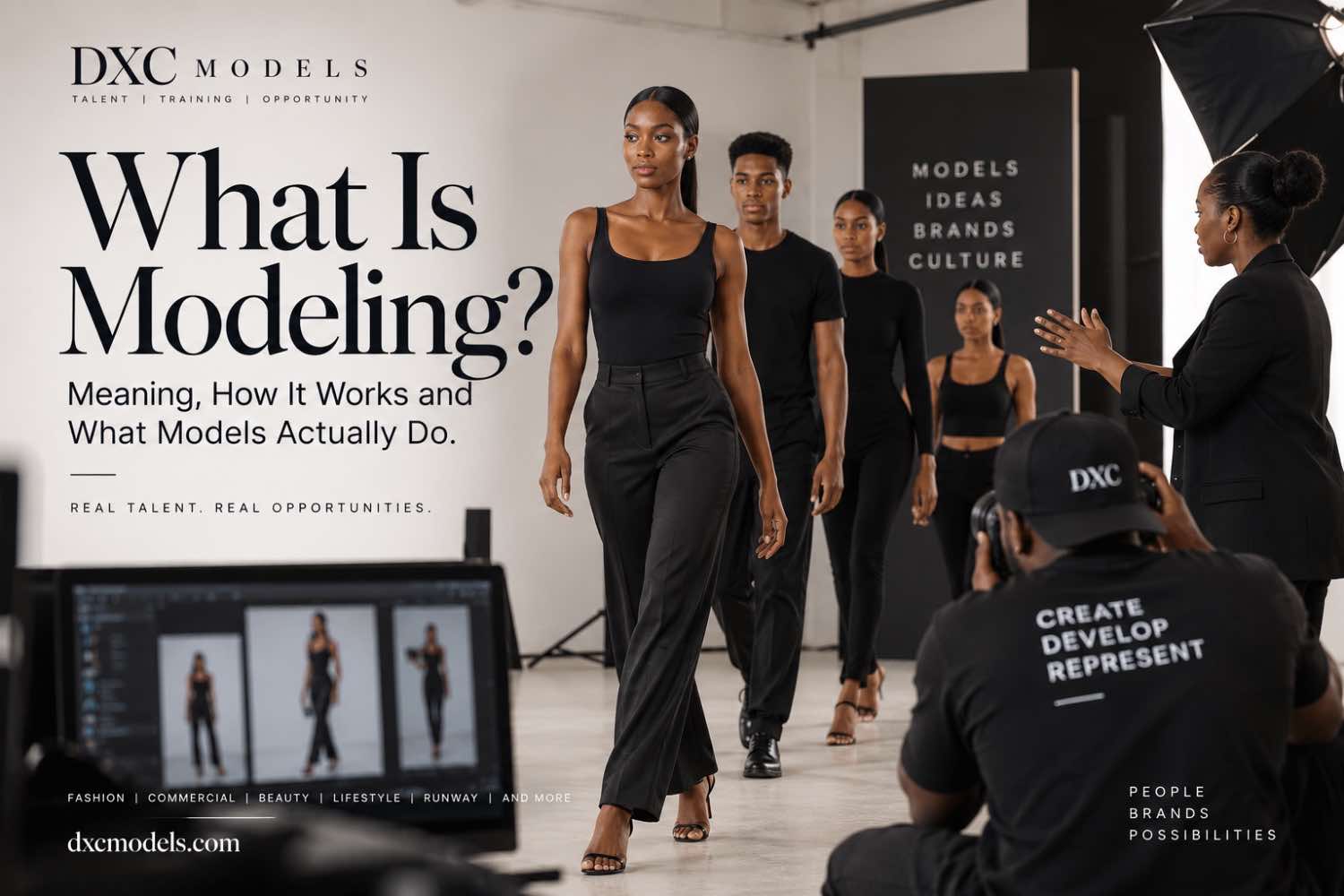
Some jobs may require walking on a runway.
Others may require smiling naturally while holding a product.
Another job may require expressive beauty close-ups.
Another may require wearing twenty outfits during an e-commerce shoot.
A professional model may be expected to:
- Pose confidently
- Move naturally
- Follow creative direction
- Control facial expressions
- Understand body angles
- Walk professionally where required
- Interact naturally with products
- Work with photographers and directors
- Change quickly between looks
- Remain professional during long shoots
- Maintain accurate measurements and appearance
Modeling is performance.
Sometimes the performance is dramatic.
Sometimes it is so natural that the audience should not even notice the effort behind it.
Is Modeling Just Taking Pictures?
No.
Photography is only one part of the modeling industry.
Models also work in:
- Runway shows
- Television commercials
- Digital advertising
- Brand campaigns
- Fashion films
- Product demonstrations
- Events
- E-commerce
- Editorial productions
Even during a photoshoot, the model is usually doing more than simply standing there.
The photographer or creative director may ask:
“Give me more energy.”
“Turn your shoulder.”
“Make it softer.”
“Look surprised.”
“Walk towards camera.”
“Make the product feel expensive.”
“Give me three completely different expressions.”
Being able to respond quickly is part of the job.
Who Hires Models?
Models can be hired by many different types of clients.
These may include:
- Fashion designers
- Clothing brands
- Beauty companies
- Hair brands
- Skincare companies
- Advertising agencies
- Production companies
- E-commerce businesses
- Telecommunications companies
- Banks
- FMCG brands
- Hospitality businesses
- Fitness brands
- Jewellery companies
- Bridal brands
- Corporate organisations
This is why modeling is much broader than fashion shows.
Where Do Models Work?
Models may work in:
- Photography studios
- Fashion show venues
- Outdoor locations
- Hotels
- Homes
- Retail stores
- Beaches
- Offices
- Film sets
- Advertising production sets
- Showrooms
- Event venues
The working environment changes depending on the assignment.
What Happens During a Modeling Job?
A professional modeling job often begins before the model arrives on set.
1. A client creates a brief.
The brief explains what type of model the client needs.
This may include:
- Age range
- Gender
- Height
- Measurements
- Appearance
- Personality
- Skills
- Location
2. Suitable models are submitted.
An agency or casting professional may send the client models who appear suitable for the brief.
3. The client selects or auditions candidates.
Some jobs are booked directly from photographs or profiles.
Others require:
- Physical casting
- Self-tape
- Video audition
- Fitting
- Callback
4. The selected model receives the job details.
This may include call time, location, wardrobe instructions and production requirements.
5. The model performs the job.
That is when professionalism, preparation and ability to take direction become important.
What Are the Main Types of Modeling?
There are many categories within the modeling industry.
Some of the most common include:
Fashion Modeling
Fashion models work with designers, fashion brands, magazines and creative teams to present clothing and fashion concepts.
Runway Modeling
Runway models present clothing by walking in fashion shows.
Runway work can have stricter height and measurement requirements than many other categories.
Commercial Modeling
Commercial models appear in advertising campaigns for everyday products and services.
This category often values relatability, personality and believable expression.
Beauty Modeling
Beauty models work on campaigns involving makeup, skincare, hair, jewellery and other products where the face or specific features are important.
E-commerce Modeling
E-commerce models wear products for online shops and catalogues.
The work often requires consistency, speed and the ability to clearly present clothing.
Lifestyle Modeling
Lifestyle models portray realistic everyday situations such as working, shopping, exercising, travelling or spending time with family.
Fitness Modeling
Fitness models may work with sportswear, gyms, wellness brands and athletic products.
Curve Modeling
Curve models work across fashion, commercial, beauty, e-commerce and lifestyle assignments.
Kids Modeling
Children can work in advertising, fashion, e-commerce, television and lifestyle campaigns with appropriate parental or guardian involvement.
There are many other categories too.
Read our detailed guide to the 15 major types of modeling.
Do You Have to Be Tall to Become a Model?
No.
You may need to be tall for certain categories, especially traditional runway work.
But runway is only one part of the industry.
Commercial, beauty, lifestyle, parts, e-commerce, kids and some other categories may have different requirements.
This is why asking:
“Am I tall enough to model?”
is often the wrong first question.
A better question is:
“Which types of modeling am I realistically suited to?”
Do You Have to Be Very Beautiful to Be a Model?
Not in the way many beginners imagine.
Clients are not always looking for the person everybody agrees is the most beautiful.
They may be looking for someone who appears:
- Trustworthy
- Relatable
- Youthful
- Professional
- Strong
- Elegant
- Friendly
- Distinctive
- Luxurious
- Sporty
- Approachable
The question is usually:
Who fits this particular brief?
That is different from:
Who is the most beautiful person here?
Is Modeling Only for Women?
No.
The industry includes:
- Female models
- Male models
- Children
- Teenagers
- Mature models
- Families
- Couples
- Specialist performers
Different campaigns require different people.
Is Modeling a Full-Time Job?
For some people, yes.
For many others, modeling is freelance, part-time or occasional work.
A model may work several jobs in one month and very few the next.
That is why beginners should understand that modeling income can be inconsistent.
Being signed or registered with an agency does not mean you will automatically receive jobs every week.
Do Models Get Paid?
Professional modeling work can be paid.
Payment depends on factors such as:
- Type of job
- Client
- Market
- Usage rights
- Length of campaign
- Media platforms
- Territory
- Exclusivity
- Model’s experience
A model appearing in a nationwide advertising campaign may be paid differently from a model doing a small local test shoot.
Some portfolio-building collaborations may also be unpaid.
This is why models should understand what they are agreeing to before accepting work.
What Skills Does a Model Need?
Professional modeling requires more than appearance.
Useful skills include:
- Posing
- Body awareness
- Facial expression
- Runway walking where relevant
- Taking direction
- Confidence
- Communication
- Professionalism
- Punctuality
- Adaptability
- Camera awareness
- Emotional control
- Patience
Looking like a model may get somebody’s attention. Performing like one is what makes you useful on set.
Model vs Influencer vs Content Creator
These roles can overlap, but they are not the same job.
Model
A model is hired primarily to visually represent a product, brand, service or creative concept.
Influencer
An influencer is usually hired partly because of access to an audience and the ability to influence that audience.
Content Creator
A content creator may be hired to produce engaging digital content.
One person can perform all three roles.
But having followers does not automatically make someone a professional model, and being a professional model does not automatically mean you need a large following.
Read our guide on models vs creators vs influencers.
What Is the Difference Between an Agency and a Client?
This is important for beginners to understand.
The client creates the job.
The client may be a:
- Brand
- Designer
- Advertising agency
- Production company
- Photographer
- Creative team
The modeling agency represents or manages models.
The agency may submit suitable models when clients send briefs.
But the agency usually does not control the client’s final selection.
How Do Models Get Selected for Jobs?
A client may consider:
- Appearance
- Height
- Measurements
- Age range
- Skin tone
- Hair
- Experience
- Movement
- Expression
- Personality
- Location
- Availability
- Previous work
Sometimes several excellent models apply and only one person fits what the client imagined.
That does not automatically mean the others are bad models.
Why Do Models Get Rejected?
Rejection is normal in modeling.
You may be rejected because:
- You are too tall for the brief
- You are too short for the brief
- Your measurements do not fit the sample clothing
- The client wants a different age range
- The brand wants a different personality
- Your look is too similar to another selected model
- The client changes direction
- Another model simply fits the brief more closely
Not being selected does not automatically mean:
“You are not good enough.”
Sometimes it simply means:
“You are not right for this particular job.”
Do Models Need a Portfolio?
Eventually, a useful professional portfolio can become very important.
But beginners do not always need to spend heavily building one before applying to an agency.
Many agencies begin by assessing:
- Polaroids
- Measurements
- Age
- Height
- Location
- Natural appearance
Read our guide on how to build a modeling portfolio as a beginner.
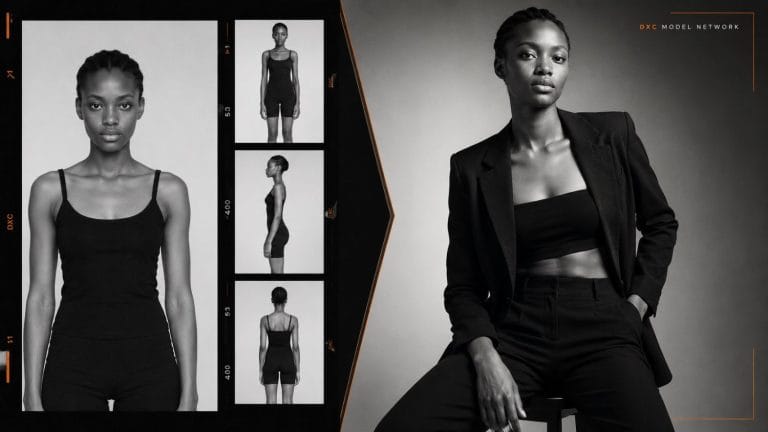
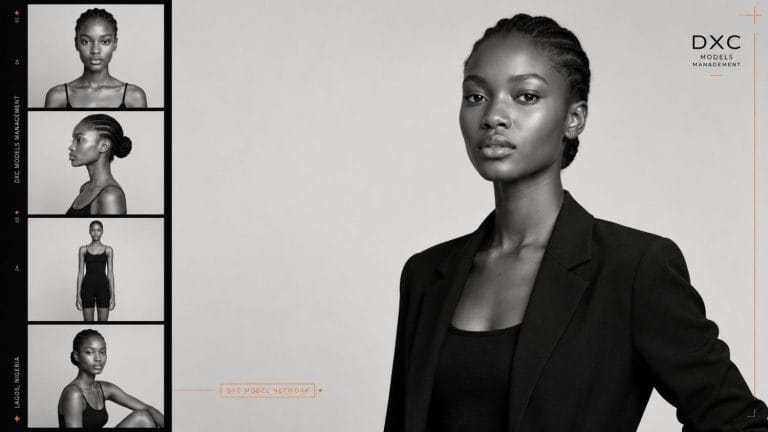
What Are Modeling Polaroids?
Polaroids are simple, current photographs used to show what a model genuinely looks like.
They usually involve:
- Minimal or no makeup
- Simple clothing
- Natural lighting
- Little or no retouching
- Clear front and side views
- Full-length images
You can learn how to take them in our guide to taking modeling polaroids at home.
How Can a Beginner Start Modeling?
1. Learn the different modeling categories.
2. Know your current measurements.
3. Take clean current polaroids.
4. Research legitimate agencies and castings.
5. Apply honestly.
6. Develop useful skills.
7. Build your portfolio gradually.
8. Keep your information and photographs current.
For a complete step-by-step explanation, read our guide on how to become a model in Nigeria.
Can You Become a Model With No Experience?
Yes.
Every professional model was once inexperienced.
The important thing is not pretending to have experience you do not have.
Begin with:
- Good polaroids
- Accurate measurements
- Basic industry knowledge
- Training where useful
- Test shoots
- Legitimate castings
Your experience grows from there.
Do Models Need Social Media?
Social media can help models with visibility, networking and personal branding.
But it is not the entire profession.
A client may still select a model because the person fits the brief and performs well, regardless of follower count.
Your Instagram account should support your professionalism, not replace your actual modeling ability.
Is Modeling Easy?
It can look easy from outside.
But professional modeling can involve:
- Long waiting periods
- Early call times
- Repeated castings
- Physical demands
- Rejection
- Uncertain income
- Constant self-presentation
- Working under pressure
There are exciting opportunities, but there are also realities beginners should understand.
Read our guide to the challenges of being a model.
Common Modeling Myths
MYTH: You must be tall to do any kind of modeling.
REALITY: Height requirements depend on the category.
MYTH: The prettiest person always gets selected.
REALITY: Clients select according to the brief.
MYTH: You need thousands of followers.
REALITY: Some jobs value audience size. Many do not.
MYTH: Signing with an agency guarantees jobs.
REALITY: Clients still make selection decisions.
MYTH: Modeling is just posing.
REALITY: Professional modeling requires performance, direction and communication.
Frequently Asked Questions
What is modeling in simple words?
Modeling is professional visual performance where a person helps present or communicate clothing, products, services or creative ideas through appearance, movement and expression.
What does a model do?
A model may pose, walk, move, interact with products, perform expressions, follow creative direction and represent a brand or idea during photography, video, runway or advertising work.
Can anyone become a model?
Not everyone will fit every category, but modeling includes many different markets. The important thing is understanding which categories realistically suit your appearance, measurements, skills and strengths.
Do you need to be tall to model?
No. Certain runway and fashion markets may require specific heights, but many commercial, beauty, lifestyle, e-commerce and specialist categories have different requirements.
Do models need professional photos before applying?
Not always. Many agencies initially request simple current polaroids, measurements and basic information.
Can modeling be a career?
Yes. Some models build long-term professional careers, while others work part-time or freelance depending on their market and opportunities.
The DXC View
The biggest mistake beginners make is treating modeling as a beauty competition.
It is not.
A model is part of a client’s communication strategy.
The question is not simply:
“Are you attractive?”
The better question is:
“Can you help this particular client communicate this particular idea?”
That is where professional modeling begins.
A model’s job is not simply to be seen. It is to help something else be understood, desired or remembered.
Want to Start Modeling in Lagos?
DXC Models works with aspiring and developing talent through training, model development, professional guidance and suitable industry opportunities.