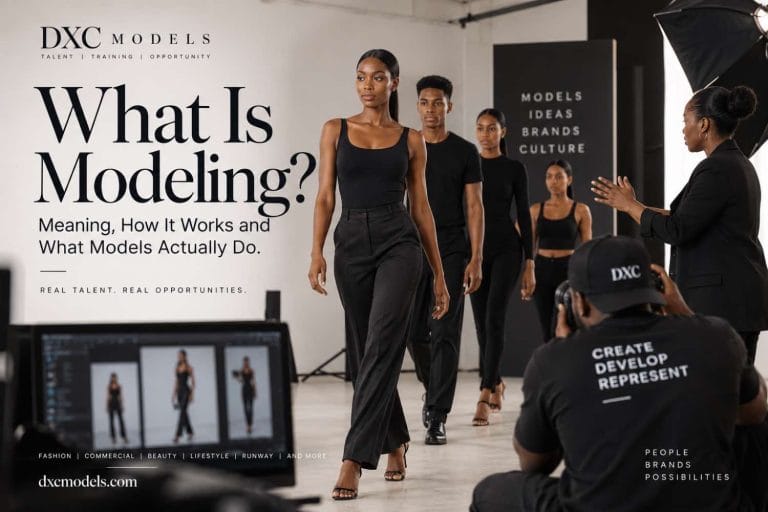
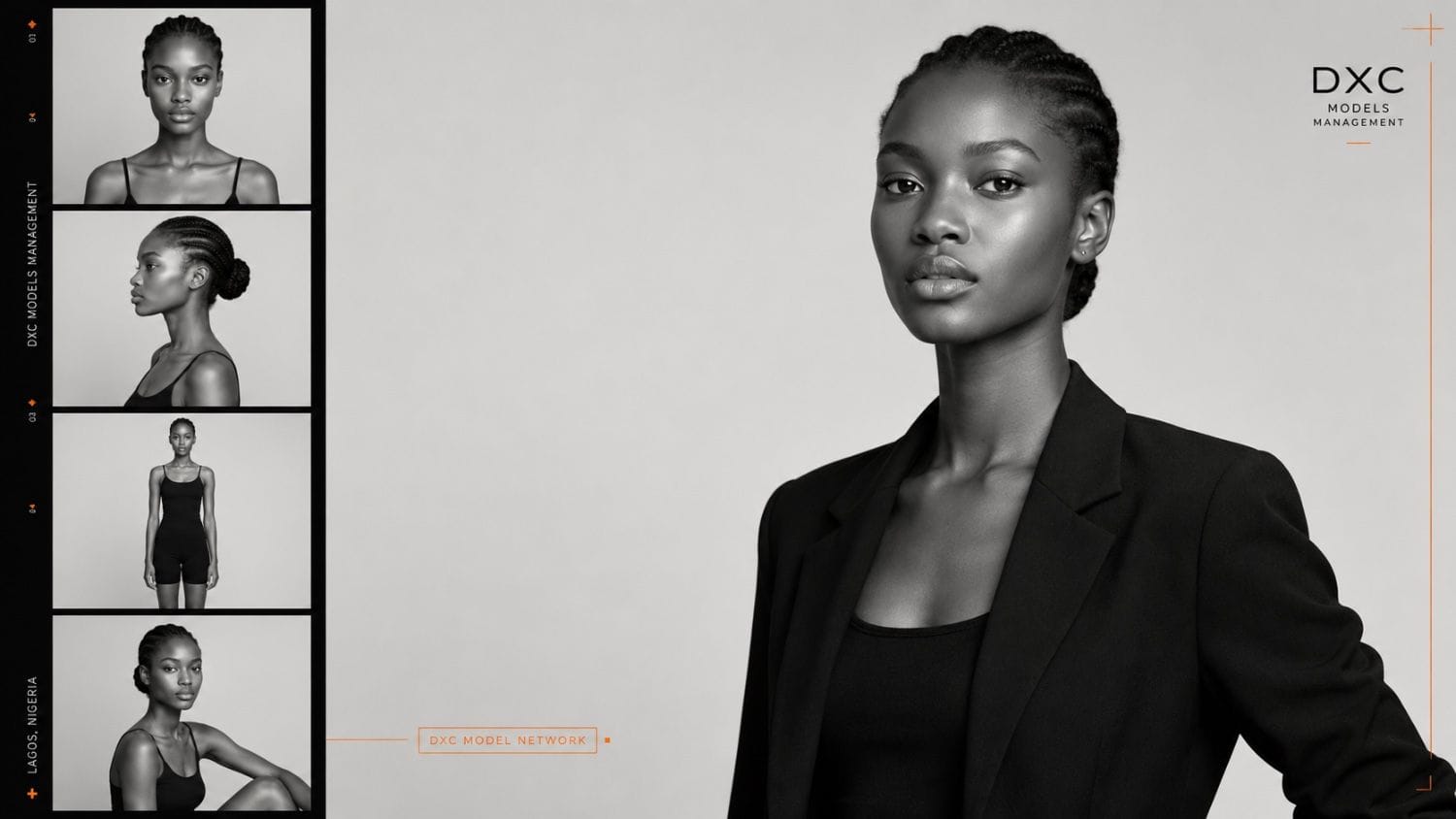
Model Training in Lagos: Why Aspiring Models Need Proper Development
Many aspiring models in Lagos believe that modeling begins when they get booked for a job.
But in reality, modeling begins before the job.
It begins with training, confidence-building, body awareness, posture, posing, runway basics, communication, grooming, casting preparation, and professional conduct.
A person may have the look of a model, but without development, they may struggle when it is time to work with agencies, brands, photographers, designers, casting directors, or production teams.
At DXC Models, we believe that talent is important, but training is what helps talent become ready.
What is model training?
Model training is the process of helping aspiring and developing models understand how to present themselves professionally within the modeling industry.
It may include:
Confidence-building
Posture correction
Runway basics
Posing techniques
Facial expression control
Camera confidence
Casting preparation
Professional communication
Personal grooming
Body control
Portfolio guidance
On-set behavior
Model branding
Industry education
Model training is not about changing who a person is. It is about helping the person understand how to use their body, face, confidence, and professionalism in a marketable way.
Why model training matters
A model is not just someone who looks good in pictures.
A model must be able to take direction, move with control, understand angles, communicate mood, follow instructions, behave professionally, and represent a brand or creative idea.
Training helps aspiring models move from potential to preparation.
Without training, a model may look good but still appear confused during castings, photoshoots, runway practice, or brand projects.
A trained model has a better chance of showing confidence, discipline, and readiness.
Looks alone are not enough
Many people are told, “You look like a model.”
That may be a good starting point, but it is not enough to build a modeling career.
The modeling industry requires more than appearance.
A model needs:
Confidence
Discipline
Awareness
Professional behavior
Good posture
Ability to pose
Ability to walk where required
Ability to take correction
Patience
Consistency
Market understanding
Appearance may attract attention, but professionalism helps sustain opportunities.
Confidence must be developed
Confidence is one of the biggest reasons aspiring models need training.
Some people look good but become uncomfortable when asked to pose, walk, speak, or stand in front of a camera.
Some models become shy during auditions. Some freeze during photoshoots. Some do not know what to do with their hands, face, body, or posture.
Confidence grows through practice.
Training gives models a safe environment to learn, make mistakes, receive correction, and improve.
At DXC Models, we believe confidence is not something every model starts with. It is something that can be built with the right guidance.
Posture affects everything
Good posture is one of the foundations of modeling.
The way a model stands affects how clothing looks, how the body appears, how confidence is perceived, and how the camera captures the person.
Poor posture can make a model look tired, unsure, or unprepared.
Good posture can make a model look confident, elegant, strong, and professional.
Model training helps aspiring models understand how to stand, walk, turn, pose, and hold themselves properly.
Posing is a skill
Many beginners think posing is just copying what they see online.
But real posing requires body awareness.
A model must understand:
Angles
Hand placement
Facial expression
Body lines
Shoulder position
Neck length
Weight shifting
Eye direction
Balance
Mood
Good posing is not about forcing dramatic shapes. It is about knowing how to communicate through the body.
Training helps models understand what works for their body and category.
Runway training is not only for fashion shows
Runway training helps models build confidence, balance, posture, timing, and body control.
Even if a model does not become a runway model, runway practice can still improve their presence.
A strong walk teaches discipline.
It helps models understand how to move, stop, turn, and carry themselves with intention.
For fashion models, runway training is especially important because designers, stylists, and casting teams often look at movement, posture, and confidence.
Camera confidence is important
Many aspiring models love pictures, but they are not always confident in front of the camera when direction is involved.
Camera confidence means being able to relax, listen, adjust, pose, express, and work with the photographer or creative team.
A model should understand how to respond when asked to smile, look serious, turn slightly, soften the face, change posture, move slowly, or repeat a pose.
Camera confidence is developed through practice and correction.
Casting preparation is part of training
A casting is not only about appearance.
Casting teams observe how models behave, listen, respond, walk, pose, speak, and follow instructions.
Training helps models prepare for castings by teaching:
What to wear
What to bring
How to introduce themselves
How to stand
How to walk
How to pose
How to behave
How to handle rejection
How to follow instructions
A model who is prepared for castings often appears more serious and professional.
Professional behavior matters
Model training should also teach professional conduct.
A model must know how to behave on set, at castings, during training, and when communicating with agencies or clients.
Professional behavior includes:
Arriving on time
Listening carefully
Respecting instructions
Communicating politely
Accepting correction
Avoiding unnecessary drama
Respecting other models
Understanding boundaries
Being reliable
Maintaining good attitude
A model who behaves professionally is easier to recommend and work with.
Training helps models understand the industry
Many aspiring models enter the industry with unrealistic expectations.
They may think modeling is only about fame, attention, free clothes, travel, or quick money.
Training helps models understand the reality of the industry.
They learn that modeling requires:
Preparation
Patience
Consistency
Rejection handling
Personal branding
Documentation
Portfolio development
Polaroids
Casting readiness
Professional growth
This understanding helps models approach the journey more seriously.
Model training helps parents too
For kids modeling, training is not only for the child. It also helps parents understand the process.
Parents need to know what kids modeling involves, what to expect, how to prepare their child, how to manage pressure, and how to support confidence-building.
A good kids modeling training environment should be age-appropriate, safe, patient, and structured.
Children should not be trained like adults.
They need encouragement, simple instructions, fun activities, repetition, and confidence-building.
At DXC Models, our Kids Division focuses on child-friendly development, confidence, camera readiness, grooming, and professional guidance.
Curve and plus-size models also need training
Curve and plus-size models need the same level of development as every other model.
Representation is important, but preparation is also important.
Curve models need to understand:
Body confidence
Posture
Angles
Fashion presentation
Camera presence
Commercial appeal
Polaroids
Portfolio direction
Casting preparation
Professionalism
A curve model should not rely only on body type. Training helps the model become more confident, prepared, and market-ready.
Training helps models discover their category
Not every model fits the same category.
Through training, a model may discover whether they are stronger in:
Fashion modeling
Commercial modeling
Runway modeling
Beauty modeling
Lifestyle modeling
Editorial modeling
Curve modeling
Kids modeling
Fitness modeling
International development
Understanding category helps the model build the right images, attend the right castings, and manage expectations properly.
Without this clarity, many models waste time trying to fit into the wrong space.
Do all models need training?
Yes, every model needs development at some point.
Some may need beginner training. Some may need advanced coaching. Some may need confidence-building. Some may need runway practice. Some may need posing correction. Some may need portfolio direction.
Even experienced models continue to improve.
Modeling is a skill-based profession, not just a look-based opportunity.
Common mistakes aspiring models make
Many new models make mistakes because they skip development.
Common mistakes include:
Thinking looks are enough
Ignoring training
Not knowing how to pose
Poor posture
Fear of the camera
Bad casting behavior
Lack of discipline
Poor communication
Overconfidence without skill
Not knowing their category
Submitting weak photos
Expecting jobs without preparation
These mistakes can reduce opportunities.
What good model training should include
A strong model training program should include both practical and educational elements.
It should cover:
Confidence
Posture
Walking
Posing
Camera presence
Expression
Casting preparation
Grooming
Professional behavior
Model materials
Industry understanding
Personal development
Modeling is not only physical. It is also mental, emotional, and professional.
Why DXC Models focuses on development
At DXC Models, we do not believe in throwing models into the market without preparation.
Our focus is to scout, train, develop, position, and guide models properly.
We work with aspiring models, kids, curve talents, commercial faces, and developing models who need structure.
Through DXC Models and DXC Academy, we are building a more professional approach to model development in Lagos and Nigeria.
Our goal is not just to make models visible.
Our goal is to make them ready.
Final thoughts
Model training is not a waste of time. It is the foundation of a serious modeling journey.
A model who trains learns how to stand, walk, pose, speak, behave, listen, and present themselves with confidence.
The industry may notice your look first, but your preparation determines how well you handle opportunities.
If you are an aspiring model in Lagos, do not wait for a casting before you start learning.
Build your confidence. Learn your body. Understand your category. Prepare your materials. Train properly. Take correction. Grow with structure.
At DXC Models, we believe that development comes before exposure, and preparation is what turns potential into professional readiness.
Explore more modeling guides, casting tips, kids modeling resources, and talent development insights on the DXC Model Network.