Model Portfolio vs Polaroid: What Is the Difference?
Many aspiring models hear the words “portfolio” and “polaroid” but do not always understand the difference between them.
This confusion is common. Some new models think a portfolio and a polaroid are the same thing. Some believe they need a full fashion photoshoot before applying to an agency. Others submit only edited Instagram pictures and wonder why agencies still ask for simple photos.
The truth is that a model portfolio and a modeling polaroid serve different purposes.
Both are important, but they are not used in the same way.
At DXC Models, we believe every aspiring model should understand the difference so they can prepare properly and avoid wasting money, time, or opportunities.
What is a modeling polaroid?
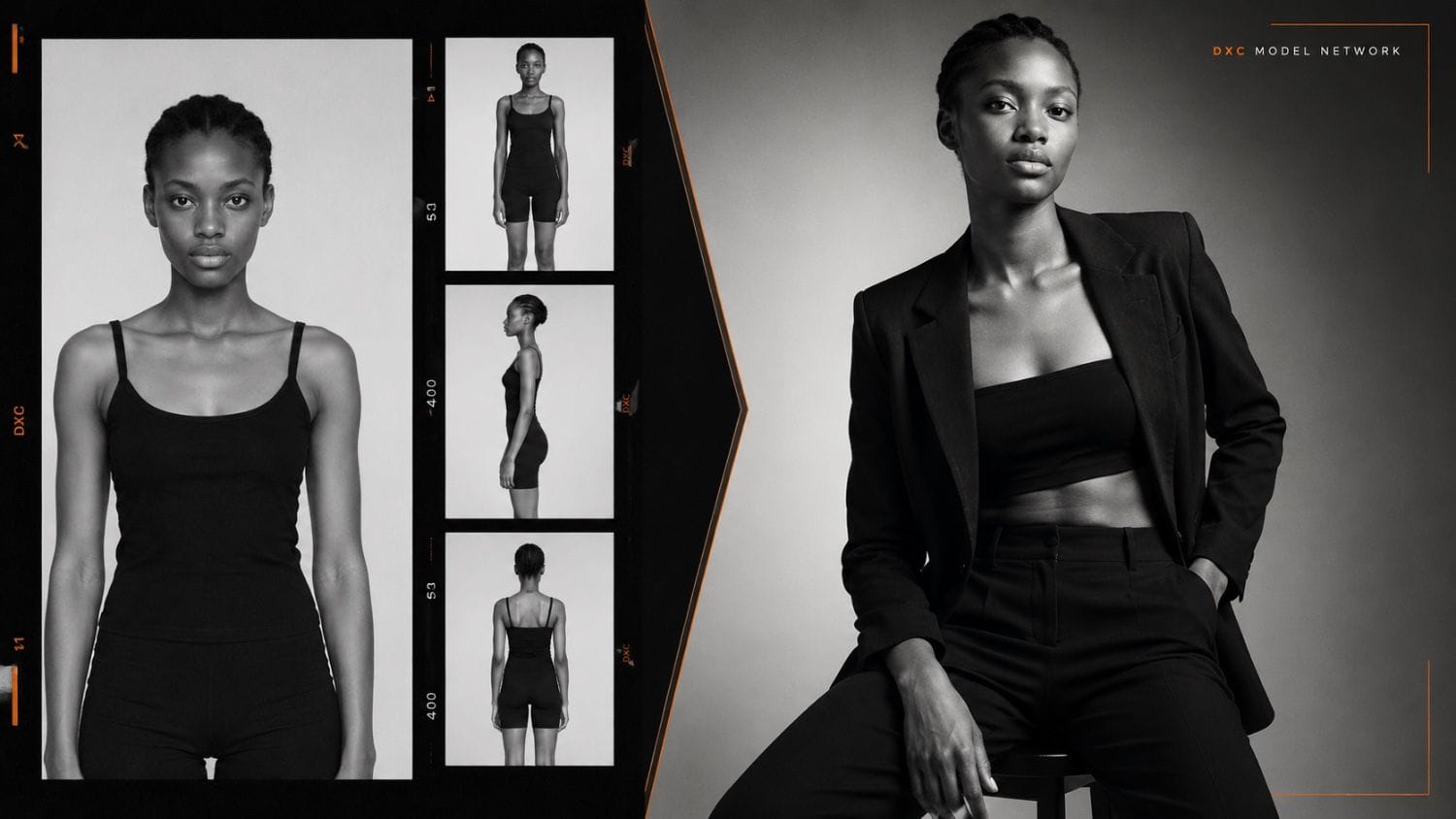
A modeling polaroid is a clean, simple, natural photo that shows what a model really looks like.
It is usually taken with little or no makeup, simple clothing, a plain background, and minimal editing. The purpose of a polaroid is to help agencies, casting directors, brands, and production teams see the model clearly.
A good polaroid shows:
The model’s face
The model’s body shape
Natural features
Posture
Proportions
Current appearance
Basic confidence in front of the camera
Polaroids are also called digitals or model digitals in some markets.
The goal is not to look like a fashion campaign. The goal is to look clear, natural, and easy to assess.
What is a model portfolio?
A model portfolio is a collection of professional images that shows a model’s range, experience, personality, and ability to interpret different creative concepts.
Unlike polaroids, portfolio images are usually styled. They may involve makeup, wardrobe, lighting, poses, creative direction, location, studio setup, or editorial concepts.
A portfolio can show that a model can work in different areas such as:
Fashion
Beauty
Commercial
Editorial
Lifestyle
Runway
Fitness
Curve modeling
Kids modeling
Creative campaigns
A portfolio is used to show what the model can do after some level of preparation, training, or creative direction.
The main difference between portfolio and polaroid
The biggest difference is this:
A polaroid shows what you naturally look like.
A portfolio shows what you can become in a styled or professional setting.
A polaroid is about clarity.
A portfolio is about range.
A polaroid helps agencies assess you.
A portfolio helps agencies, brands, and clients understand your ability, experience, and creative potential.
Both are useful, but they answer different questions.
What question does a polaroid answer?
A polaroid answers:
“What does this model really look like?”
That is why it should be simple.
When an agency sees your polaroids, they are checking your natural look, posture, body structure, facial features, proportions, and development potential.
They are not expecting a dramatic image. They are expecting honesty and clarity.
What question does a portfolio answer?
A portfolio answers:
“What can this model do?”
A strong portfolio helps people see how you perform in front of the camera. It shows your expressions, posing ability, confidence, versatility, and professionalism.
It can also help a client imagine you in a campaign, lookbook, fashion shoot, beauty advert, commercial, or brand project.
Which one does a beginner model need first?
A beginner model usually needs clean polaroids first.
This is because agencies need to assess your natural look before deciding how to develop or position you.
You do not need to rush into a full portfolio shoot without proper guidance. Many new models spend money on photoshoots that do not help their modeling career because the images are too edited, too random, or not aligned with the market.
Start with clean polaroids. Then, after you understand your direction, you can build a portfolio with more intention.
When does a model need a portfolio?
A model needs a portfolio when they are ready to show range and market readiness.
You may need a portfolio when:
You are applying for certain jobs
You want to show experience
You are ready for brand submissions
You need to show different looks
You want to work with designers, photographers, or commercial clients
You are preparing for stronger agency representation
You are developing your personal model brand
A portfolio becomes more useful when it is planned properly.
A random collection of beautiful pictures is not always a strong portfolio. The images should support the type of modeling opportunities you want.
Can Instagram pictures replace a portfolio?
Not really.
Instagram can show personality and visibility, but it does not always replace a proper model portfolio.
Many Instagram pictures are taken for lifestyle, beauty, attention, or personal expression. They may not show casting teams what they need.
A professional model portfolio is more intentional. It should show your ability to work with direction, pose properly, express different moods, and present yourself in a way that supports modeling opportunities.
Instagram can support your modeling career, but it should not be your only modeling material.
Can a phone photo work as a polaroid?
Yes, a phone photo can work as a polaroid if it is clean and clear.
You do not always need a studio to take beginner polaroids, especially when you are just submitting to an agency.
However, the photos must be sharp, current, and honest.
A good phone polaroid should have:
Good lighting
Clean background
No filters
No heavy editing
Simple outfit
Clear face
Full body visibility
Natural posture
Avoid blurry photos, mirror selfies, group pictures, dramatic makeup, and over-edited images.
What should be inside a basic polaroid set?
A basic polaroid set should usually include:
Clear headshot
Full-body front photo
Side profile
Three-quarter angle
Natural smile
Neutral expression
Back view where required
The exact requirement may depend on the agency or casting, but these are strong basics.
What should be inside a model portfolio?
A model portfolio should show range, but it should still feel focused.
Depending on the model’s direction, a portfolio may include:
Clean studio portraits
Fashion images
Beauty shots
Commercial lifestyle images
Editorial images
Full-body shots
Movement shots
Runway images where available
Curve or body-positive images where relevant
Kids-friendly images for child models
The best portfolio is not always the biggest one. It is better to have a few strong images than many weak or confusing images.
Why models should not rush portfolio shoots
Many aspiring models rush into portfolio shoots because they want to “look like a model.”
But without direction, a portfolio shoot can become just another photoshoot.
Before paying for a portfolio, you should understand:
Your modeling category
Your strengths
Your market
Your body type
Your facial strengths
Your styling direction
What agencies or brands need from you
What kind of images will help your positioning
This is why agency guidance matters.
A good agency or model development team can help you avoid wasting money on images that do not support your career.
Why agencies ask for both
Agencies may ask for both polaroids and portfolios because they serve different purposes.
Polaroids help the agency see your natural look.
Portfolios help the agency see your experience, range, and creative potential.
For new models, polaroids may be enough at the beginning. For developing models, a portfolio becomes more important as they grow.
For models who want to be submitted to brands or clients, having strong polaroids and a strong portfolio can improve presentation.
Common mistakes aspiring models make
Many new models make simple mistakes when preparing their images.
Some common mistakes include:
Using only edited Instagram photos
Submitting old pictures
Using heavy filters
Confusing beauty pictures with modeling materials
Paying for random photoshoots without direction
Not having clean polaroids
Not updating photos after changing appearance
Using images that do not match their real look
Creating a portfolio that does not fit their modeling category
These mistakes can make it harder for agencies or casting teams to assess the model properly.
Which one helps with castings?
Both can help, but in different ways.
For some castings, clean polaroids are enough because the casting team wants to see your current look.
For other opportunities, a portfolio may help show your experience and ability.
For example, a brand may want to see if you have worked in front of the camera before. A fashion designer may want to see your body movement or editorial range. A commercial client may want to see your smile, personality, and lifestyle appeal.
The stronger your materials, the easier it is to present you professionally.
How DXC Models uses polaroids and portfolios
At DXC Models, we use polaroids and portfolios as part of model development and positioning.
Polaroids help us understand a model’s current look, natural features, posture, and development needs.
Portfolio images help us understand the model’s range, image direction, camera confidence, and market readiness.
We believe models should not just take pictures. They should build the right materials for the right purpose.
Final thoughts
A modeling polaroid and a model portfolio are not the same thing.
A polaroid shows your natural look.
A portfolio shows your professional range.
A beginner model should usually start with clean polaroids before investing in a full portfolio. As the model grows, a strong portfolio becomes important for castings, client submissions, agency presentation, and brand opportunities.
If you are serious about becoming a model, do not rush the process. Start with clarity. Get clean photos. Understand your category. Build your confidence. Then develop a portfolio that supports your direction.
At DXC Models, we help aspiring and developing models understand what they need at each stage of their journey, from polaroids to portfolio development, casting preparation, and market readiness.
Explore more modeling guides, casting tips, kids modeling resources, and talent development insights on the DXC Model Network.